Golden Pokies Casino Australia 2026: What the Law Says
 Available in US
Understanding the Australian Pokies Landscape
Pokies occupy a position in Australian gambling that few other products share: they are present in every state and territory, embedded in the routine operation of pubs and clubs, and central to how much of the domestic gambling economy actually moves. Any attempt to talk about golden pokies casino Australia 2026 as a search term has to start here, with the underlying machines and the market they sit inside, before questions of legality or bonus structures make sense.
Electronic gaming machines — EGMs, or pokies in the vernacular used throughout this article — operate across all Australian states, the Australian Capital Territory and the Northern Territory. There is no jurisdiction in the country where pokies are simply absent. This uniformity of presence is unusual for a gambling product; sports betting and lotteries have their own state-by-state licensing arrangements, but the physical pokie, sitting in a club or pub, is a fixture nationwide. That ubiquity is part of what makes the category economically significant, and part of what makes it a recurring subject of regulatory attention.

The scale of the market
The financial numbers involved are large enough that they are worth stating precisely rather than approximately. In the 2020–2021 financial year, Australians placed bets worth almost AUD 150 billion on electronic gaming machines. That figure describes total turnover — the amount wagered, not the amount lost — and it reflects the fact that pokies are played repeatedly, with money cycling through the machine many times within a single session. Turnover of that size is a function of volume and speed of play rather than any single characteristic of the machines themselves.
What players actually lost is a different, smaller number. In the same financial year, the total player loss from electronic gaming machines across Australia was about AUD 12 billion. The gap between turnover and loss is the mechanical result of how pokies pay out over the course of play: money is returned to players repeatedly, then wagered again, so the total amount put through the machines vastly exceeds the amount that ultimately leaves players’ pockets net of what comes back.

Divided across the population, the FY 2020–2021 loss figure works out to AUD 608 in per-capita losses from electronic gaming machines. This is not a figure describing what any individual gambler lost — it is national loss divided by national population, gamblers and non-gamblers alike — but it gives a sense of how deeply embedded pokie losses are in the aggregate household economy. Few other consumer categories generate a comparable per-head loss figure that applies to the entire population rather than to a self-selected group of participants.
More recent turnover data extends the picture, though it should be read with appropriate caution about its source. According to figures reported by complyadvantage.com, pokies generated AUD 191.2 billion in gambling turnover in 2023. This is a single source describing a different measurement point than the FY 2020–2021 figures above, and it should not be read as a continuation of the same series or as an established market benchmark — it is one organisation’s reported figure, cited here as such rather than as confirmed national statistics. Whether the increase from AUD 150 billion to AUD 191.2 billion reflects genuine market growth, a change in measurement methodology, inflation in the value of currency wagered, or some combination of these is not something the available figures can settle.
Where pokies are found
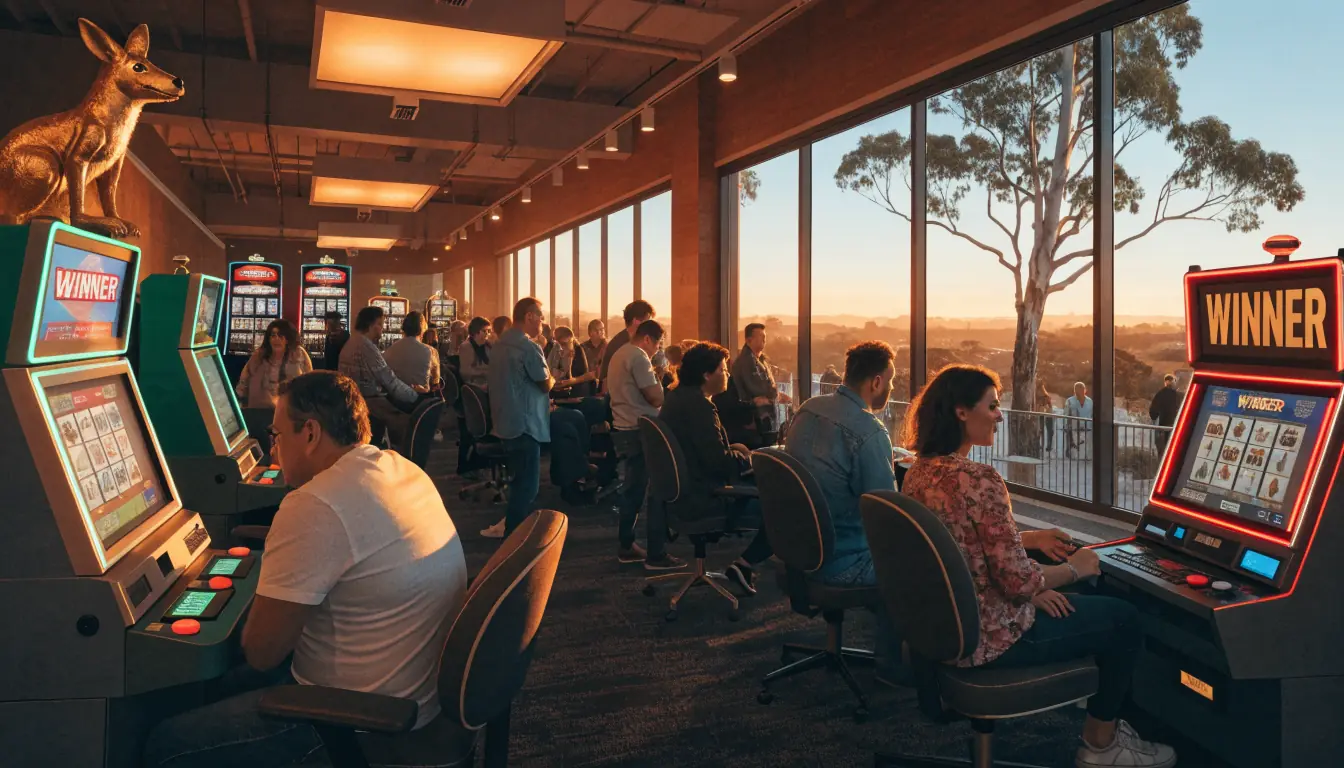
Pokies are not confined to purpose-built casinos. They are widely used in Australian pubs, clubs, and casinos, which is part of what distinguishes the Australian market from jurisdictions where slot machines are largely restricted to casino floors. The presence of pokies in ordinary suburban pubs and local clubs — RSL clubs, sporting clubs, licensed venues of every description — means that access to the machines does not require a trip to a dedicated gambling venue. This distribution pattern has consequences for how often people encounter pokies in daily life, and it is one of the reasons the per-capita loss figure above is as high as it is: the machines are close at hand rather than concentrated in a small number of large venues.
Illegal Online Pokies
Online real‑money pokies are prohibited for Australian residents under the Interactive Gambling Act 2001. Offering or accessing such services breaches Australian law.
This pub-and-club model also means that the economics of pokies are tied into the operating models of many small and mid-sized hospitality venues, not just large casino operators. A club with a modest number of machines and a casino with hundreds of machines both fall under the general category of pokies operators, though the following sections of this discussion — which address anti-money-laundering obligations rather than market structure — note that regulatory requirements differ according to the number of machines a venue operates.
Australia’s share of the global pokies footprint
One figure that recurs in discussions of the Australian pokies market is the country’s share of the world’s poker machines, and it is worth being precise about the fact that sources do not agree on this number. One account holds that Australia accounts for 3% of the world’s pub and club poker machines. A second version, appearing in other material on the subject, puts the figure far higher: Australia accounts for about 18% of the world’s poker machines. These two figures are not close enough to be reconciled as rounding differences or as measuring slightly different things by accident — they describe substantially different pictures of Australia’s global weight in this market, and no attempt is made here to decide which is correct. What can be said is that both figures originate from sources discussing the same general claim — Australia’s proportion of global machine numbers — and that a sixfold discrepancy between the two suggests differences in scope (for example, whether casino machines are included alongside pub and club machines, or whether the comparison set of "world" machines is defined the same way in both cases). Readers encountering either figure elsewhere should treat it as contested rather than settled.
What is not contested is that Australia’s population is small relative to many other gambling markets, which makes either version of the figure — 3% or 18% — a notable indicator of machine density per resident, even without resolving which number is accurate. A country with roughly the same population as a mid-sized global city fielding a meaningful share of the world’s poker machines, under either estimate, says something about how normalised pokies are within Australian consumer culture relative to comparable-sized nations elsewhere.
Reading turnover, loss and machine share together
There is a temptation to treat headline figures — turnover in the hundreds of billions, loss in the tens of billions, a share of world machines quoted in single or double digits — as directly comparable measures of "how big" the pokies market is. They are not directly comparable, because they measure different things. Turnover is the gross amount wagered before winnings are recycled into further bets. Loss is the net amount that leaves players’ hands after winnings are returned and rewagered. Machine share is a count of physical units, unrelated to how much money passes through them. A market could, in principle, have a large machine count and comparatively modest turnover, or a small machine count generating very high turnover per unit, and the figures above do not distinguish between these scenarios for Australia specifically.
Almost AUD 150 billion wagered on electronic gaming machines.
About AUD 12 billion lost by players.
What the available data supports is a general statement: Australia has a large number of pokies distributed across every state and territory, operating primarily in pubs and clubs rather than being confined to casinos, generating turnover measured in the tens of billions of dollars annually as of FY 2020–2021, with a later, separately sourced figure suggesting turnover in a similar order of magnitude — though not necessarily comparable — for 2023. Player losses in FY 2020–2021 ran to roughly AUD 12 billion nationally, equivalent to several hundred dollars per resident when spread across the entire population.
Regulatory environment: a market, not a single regime
It would be a mistake to describe Australian pokies regulation as a single national scheme. Machines are approved, taxed and supervised at the state and territory level, which is consistent with the broader pattern in Australian gambling law: state and territory governments hold primary responsibility for gambling within their borders, while Commonwealth law addresses cross-border and online activity separately. This division matters for understanding why pokies figures are often reported nationally as aggregates — as with the FY 2020–2021 turnover and loss figures cited above — even though the underlying rules governing machine numbers, venue caps, and taxation differ from one jurisdiction to another.
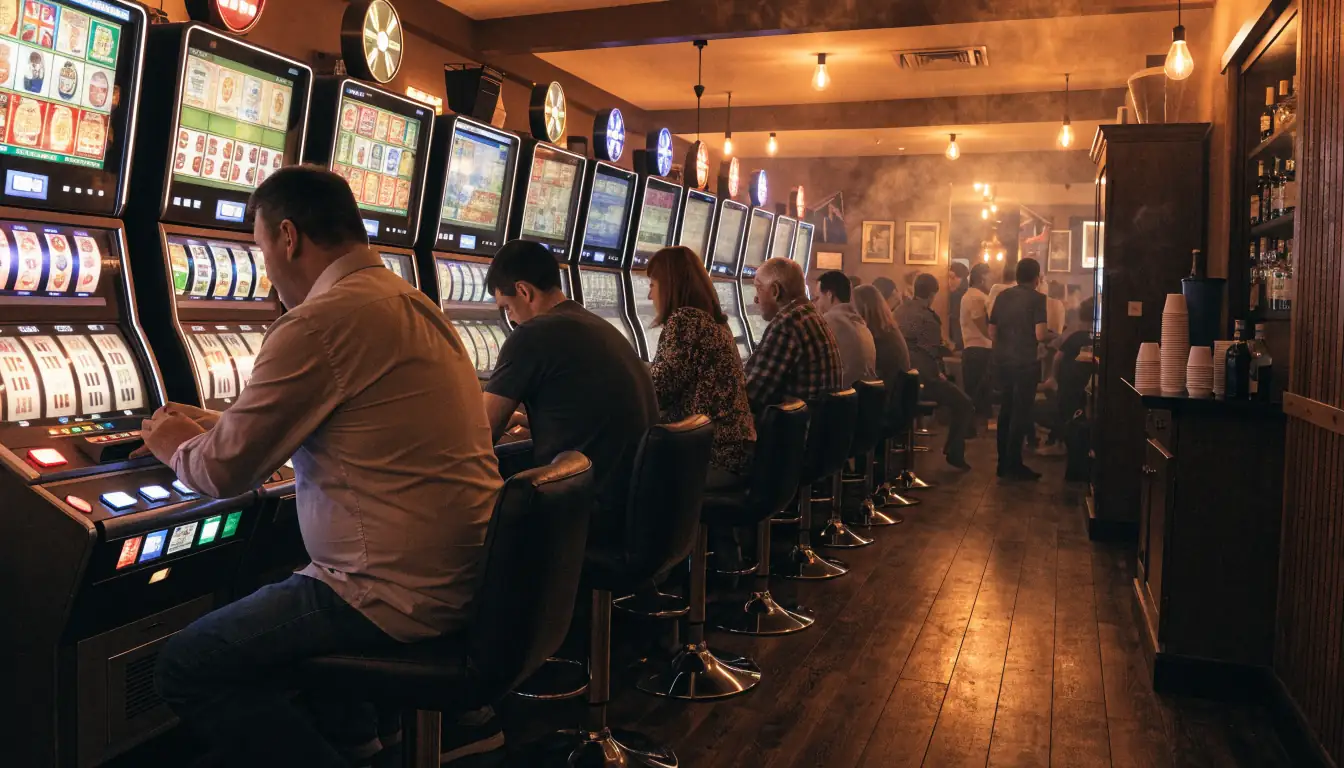
The venue-based structure of the Australian pokies market — machines sitting in pubs and clubs rather than centralised in casinos — also shapes how regulatory attention is distributed. A large number of relatively small venues, each operating a modest number of machines, creates a different supervisory task than a smaller number of large casino floors would. This has direct relevance for compliance obligations that scale with the number of machines a venue operates, a subject addressed in detail in the discussion of money-laundering risk elsewhere in this material rather than here.
Why the scale matters for anyone researching pokies in 2026
Anyone searching for information framed around a golden pokies casino in Australia in 2026 is likely encountering marketing language attached to a specific brand or product name. It is worth separating that kind of branding from the underlying facts about the Australian pokies market described above. The scale figures — turnover approaching AUD 150 billion in FY 2020–2021, losses around AUD 12 billion in the same year, per-capita losses of AUD 608, and a more recent, separately sourced turnover figure of AUD 191.2 billion for 2023 — describe the electronic gaming machine sector as a whole, not any single brand, operator or product line within it. No single machine, however marketed, accounts for a meaningful share of numbers this size, and no publicly available data ties a specific branded product to a measurable share of national turnover or loss.
Regulatory Variation
Regulatory requirements for pokies differ between Australian states and territories, meaning operators must comply with the specific rules of each jurisdiction.
This distinction between the aggregate market and any individual named product recurs throughout discussions of Australian pokies, because the scale of the sector is precisely what makes it subject to close regulatory scrutiny, both in terms of consumer protection and — as later sections address — anti-money-laundering compliance. The size of the market is also why pokies remain a recurring subject in Australian public policy debate: a sector generating turnover in the order of AUD 150–190 billion annually, embedded in ordinary pubs and clubs across every state and territory, represents a large enough share of household gambling expenditure that changes to its regulation have consequences that extend well beyond dedicated casino gambling.
Summary of the figures
| Measure | Figure | Period | Source note |
|---|---|---|---|
| Total amount wagered on EGMs | Almost AUD 150 billion | FY 2020–2021 | National aggregate |
| Total player loss on EGMs | About AUD 12 billion | FY 2020–2021 | National aggregate |
| Per-capita loss on EGMs | AUD 608 | FY 2020–2021 | National population divided |
| Share of world’s pub/club poker machines | 3% (one source) or about 18% (another source) | Not dated | Sources disagree; both cited without resolution |
| Gambling turnover from pokies | AUD 191.2 billion | 2023 | Reported by complyadvantage.com; single source, not directly comparable to FY 2020–2021 figures |
These figures, taken together, describe a market that is large by any domestic standard, distributed across the entire country rather than concentrated in a handful of venues, and subject to reporting that does not always agree on the finer points — a caveat that applies specifically to Australia’s share of global machine numbers, where the two available figures diverge substantially rather than merely differing by rounding. The remainder of this discussion turns to how this market is regulated online, how real-money play intersects with money-laundering risk, and how bonus and deposit-code promotions are governed — each a distinct question from the market-scale picture set out here.
Legal Status of Online Pokies in Australia
Before signing up anywhere, it helps to see how a handful of licensed operators actually stack up on welcome offers, deposit requirements, and payout terms.
License: Curacao OGL/2024/1335/0780 · Bonus: up to A$1,000 + 150 free spins, wager-free · Min. deposit: EUR 20 Licensed under Curacao OGL, Vegaz Casino stands out for a wager-free welcome bonus of up to A$1,000 plus 150 free spins, with a low EUR 20 minimum deposit to get started.
License: Curacao Gaming Control Board OGL/2023/176/0095 (Hollycorn N.V.) · Bonus: up to A$1,500 + 200 free spins across 3 deposits Regulated by the Curacao Gaming Control Board via Hollycorn N.V., LuckyVibe offers a sizeable welcome package worth up to A$1,500 plus 200 free spins spread across three deposits.
Bonus: 240% up to A$4,100 + 300 free spins WinShark is notable for its high-percentage welcome deal, offering 240% up to A$4,100 along with 300 free spins.
License: Curacao Gaming Control Board · Bonus: up to A$5,000 + 400 free spins Licensed by the Curacao Gaming Control Board, JustCasino backs its offering with a substantial bonus of up to A$5,000 plus 400 free spins.
License: Curacao · Bonus: up to A$10,000 multi-stage + 500 free spins · Min. deposit: A$20 (POLi) Lucky Dreams, licensed in Curacao, provides a multi-stage bonus reaching up to A$10,000 with 500 free spins, and keeps entry accessible with a A$20 minimum deposit via POLi.
License: Curacao eGaming (Dama N.V.) · Bonus: up to A$10,000 + 180 free spins, 40x wagering Operated by Dama N.V. under a Curacao eGaming licence, JeetCity Casino offers a bonus of up to A$10,000 plus 180 free spins, with wagering set at 40x.
License: Curacao · Bonus: 100% up to A$500 + 200 free spins, 10x wagering · Payout speed: crypto 30-60 minutes, fiat 1-5 days · Min. deposit: A$10 Wild Tokyo, licensed in Curacao, pairs a 100% bonus up to A$500 with 200 free spins and a low 10x wagering requirement, plus fast crypto payouts within 30-60 minutes and a A$10 minimum deposit.
License: Curacao · Bonus: up to A$2,000 Golden Pokies is a Curacao-licensed operator offering a welcome bonus of up to A$2,000.
License: Curacao Gaming Control Board OGL/2023/176/0095 (Hollycorn N.V.) · Bonus: up to A$11,000 + 300 free spins (code NEO100) Backed by Hollycorn N.V. under a Curacao Gaming Control Board licence, Neospin offers one of the larger bonuses on this list, up to A$11,000 plus 300 free spins via bonus code NEO100.
License: Tobique Gaming Commission · Bonus: up to A$8,000 + 400 free spins across 4 deposits · Payout speed: crypto ~10-15 minutes, fiat 1-5 days · Min. deposit: A$30 Licensed by the Tobique Gaming Commission, SkyCrown offers a bonus of up to A$8,000 plus 400 free spins over four deposits, with quick crypto payouts of around 10-15 minutes and a A$30 minimum deposit.
The legislative position on real-money online pokies in Australia is narrower and more specific than the broader regulatory landscape covering land-based machines. The Interactive Gambling Act 2001 is the relevant Commonwealth law, and it makes it an offence for online operators to offer real-money gambling — including online pokies, roulette, blackjack and similar casino-style products — to Australian residents. The offence sits with the operator, not with the person playing. No provider can lawfully hold a domestic licence to run an online casino for Australian players, and no such licence exists to check or verify.
This distinction matters for anyone searching for names like Golden Pokies, Golden Crown, Golden Century, Golden Strike, Golden Goddess, Golden Egypt, Golden Jaguar or Golden Jungle in an Australian context. None of these can be operated under an Australian licence, because that category of licence is not issued here. Any brand offering real-money slots to Australian residents online is doing so outside the Interactive Gambling Act’s permitted scope, regardless of what licensing claims appear on its website. Since there is no public register of licensed operators in this market, there is also no way to "check" or "verify" such a claim against an Australian authority — the register simply does not exist for this category of gambling.
Player winnings from gambling are not subject to income tax in Australia.
What the law actually restricts
The Interactive Gambling Act 2001 targets the supply side of real-money online casino gambling. It does not, on its own terms, treat play by an individual Australian resident as a criminal act. This is a narrow but important point: the legislation was built to constrain operators, not to prosecute players. That said, the absence of a domestic licensing pathway means there is no regulated, legally sanctioned Australian online pokies product available to residents in the first place — offshore platforms sit entirely outside Australian oversight, dispute resolution and consumer protection frameworks.
Taxation sits apart from legality
Two separate tax questions are worth distinguishing from the legality question above:
- Player winnings. Gamblers’ winnings in Australia are not taxed. This applies to gambling activity generally and is unrelated to whether a particular online product is lawfully offered.
- Operator taxation. Taxation of gambling operators in Australia varies by state and by type of gambling service. This variation applies to licensed forms of gambling — such as wagering and lotteries — rather than to the online casino category, which has no domestic licensing regime to tax in the first place.
These two facts should not be read as evidence that online pokies operate in a taxed, regulated space in Australia. They describe the tax treatment of gambling activity that is lawfully licensed at state or territory level, a category that does not include real-money online casino games.
Why this differs from the offline market
Land-based pokies in pubs, clubs and casinos operate under state and territory licensing and oversight, forming part of a large, established market. Online real-money pokies are governed by an entirely separate piece of Commonwealth legislation with the opposite effect: rather than licensing supply, it prohibits it. Conflating the two — assuming that because pokies are lawful and heavily regulated offline, an equivalent online product must also be sanctioned — misreads the statute. The Interactive Gambling Act 2001 draws a clear line between the two markets, and that line has not shifted toward permitting domestically licensed online casino operators.
Money‑Laundering Risks and Real‑Money Play
Games marketed under names like Golden Century, Golden Goddess, Golden Egypt, Golden Jaguar, Golden Jungle or Golden Wolves belong to a broader category of pokies titles circulating in searches for real-money and free-play formats. None of these titles are tied to a licensed Australian real-money offering — as established in the preceding section, no domestic licence for online casino-style pokies exists. Where such titles appear in a real-money context outside a state-licensed venue, the underlying legal problems described earlier apply regardless of the game’s name or theme. What this section addresses is a separate risk that attaches to real-money pokies generally, whether played in a licensed pub, club or casino: their exploitation for money laundering.
AML reporting thresholds
Operators with more than AUD 10,000 cash transactions must report these to AUSTRAC, and venues running over 15 machines are required to implement full AML/CFT programs.
Why pokies are a laundering vector
The mechanics that make pokies popular — high cash turnover, rapid transaction cycles, and limited scrutiny of individual sessions — also make them attractive to launder illicit funds. According to a report cited by complyadvantage.com, criminal networks recruit money mules to move money through pokies venues, using third parties to distance illicit funds from their original source. This is a claim from a single source describing a specific laundering method, not a description of how the pokies sector operates as a whole.
Recognised red flags
AUSTRAC issued a guide in 2024 intended to help venue operators and compliance staff recognise money‑laundering indicators specific to electronic gaming machines. The red flags identified include:
- Unusually high cash access relative to a patron’s apparent means.
- Large or repeated cash deposits inconsistent with typical play patterns.
- Cash transfers between patrons or accounts connected to gaming activity.
- Requests for disbursement checks from the casino cage that do not correspond to genuine winnings.
- Certain occupations flagged as carrying elevated exposure to laundering risk.
These indicators are designed to be assessed together rather than individually, since any single transaction may have an innocent explanation.
Obligations on larger operators
The compliance burden scales with the size of the operation. Venues running more than 15 pokies are required to:
- Appoint a dedicated compliance officer.
- Conduct formal risk assessments of their gaming operations.
- Implement AML/CFT programs consistent with AUSTRAC’s requirements.
- Perform customer due diligence on patrons engaged in higher-risk transactions.
- Report any cash transaction exceeding AUD 10,000 to AUSTRAC.
These obligations exist independently of any bonus, promotional or deposit-code arrangement a venue might offer — such promotional mechanics are addressed separately below and do not alter the AML reporting duties described here. The obligations apply to the operation of the machines themselves, tied to venue size rather than to game brand, theme or software provider. No public data distinguishes laundering exposure by specific pokies title, and no such distinction should be inferred from a game’s name, gold-themed or otherwise.
Bonus Structures and Deposit Codes: Compliance Considerations
Searches for a "golden pokies no deposit bonus code" or a sign-up offer tied to deposit codes assume a domestically regulated online casino capable of issuing such promotions to Australian players. No such operator exists. Real-money online casino games, including pokies, are prohibited under the Interactive Gambling Act 2001, and no licence to operate one domestically can be granted. Any site advertising no-deposit bonus codes, free chips, or sign-up offers for online pokies to an Australian audience is doing so from an offshore jurisdiction, outside the reach of Australian licensing and outside the compliance regime described elsewhere in this article.
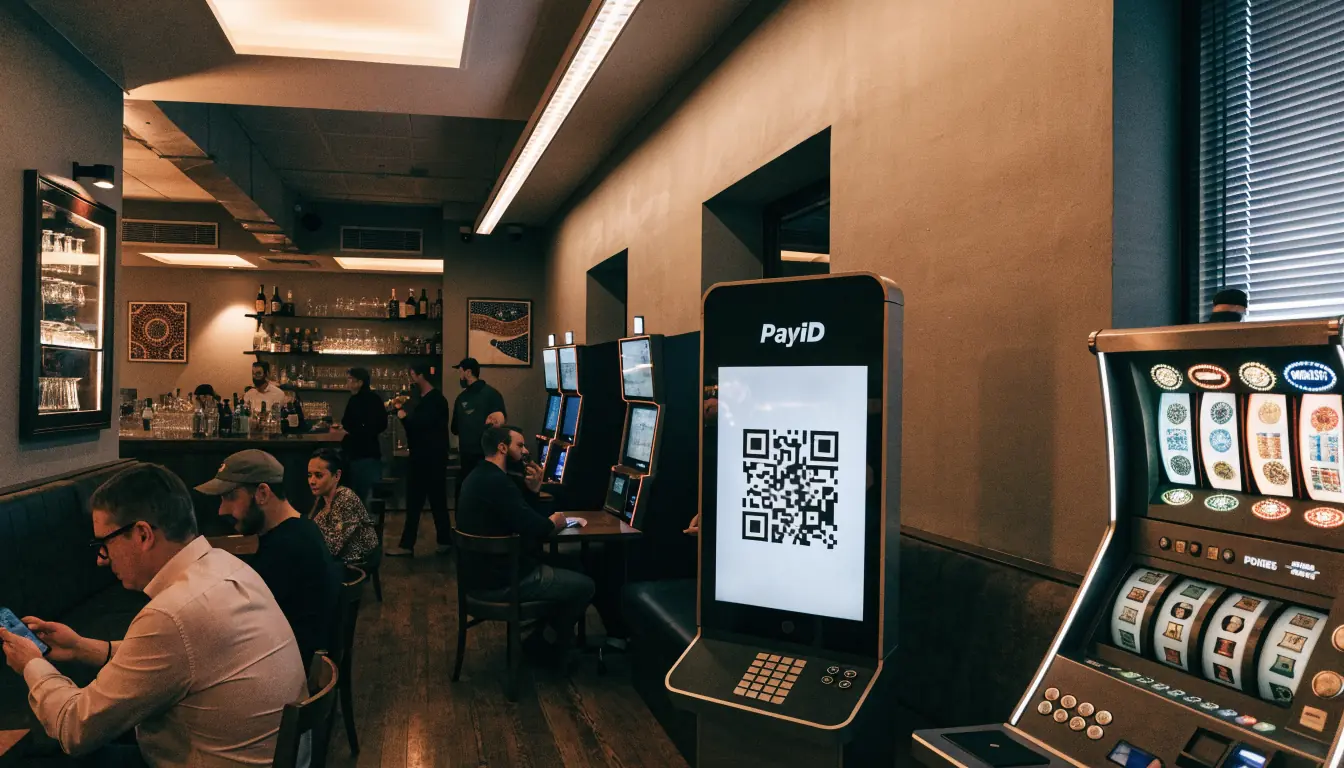
This distinction matters because bonus offers are not a neutral marketing detail — they are a compliance surface. Where gambling products are lawfully offered in Australia, wagering requirements must be disclosed clearly before a bonus is accepted, and identity verification is required before any withdrawal can proceed. These obligations exist to prevent bonus mechanics from being used to obscure the source or destination of funds, a concern that sits alongside the broader anti-money-laundering framework covered earlier.
Enforcement for non-compliance is not symbolic. Operators found in breach of applicable requirements can face remedial directions, infringement notices, and civil fines, alongside reputational damage that follows publicised enforcement action. In New South Wales, an amendment to the Casino Control Act 1992 permits fines of up to AUD 100 million against casino operators for compliance failures — a figure that signals how seriously regulators treat breaches within the licensed land-based sector, even though it says nothing about offshore online operators offering bonus codes outside that jurisdiction entirely.
For Australian residents, no bonus code, deposit promotion, or free-chip offer changes the underlying legal position: online pokies for real money are not something a licensed local operator can provide, and no amount of promotional framing alters that.
Created by the ”Pokies Pro” editorial team.