Pokies Tips and Tricks 2026: Odds and Strategies
 Available in US
How to Increase Your Chances of Winning on Australian Pokies
Pokies occupy a scale in Australia that has no real equivalent elsewhere. Australians bet almost AUD$150 billion on electronic gaming machines in the 2020–2021 financial year, and lost approximately AUD$12 billion of that in the process. Spread across the population, that loss works out to roughly AUD$608 per person for the year — a figure that includes people who never touched a machine, which says something about how concentrated the actual losses are among regular players. Australia holds 3% of the world’s pub and club poker machines while accounting for only 0.3% of the global population, a disproportion that has persisted for years and shapes much of how pokies are regulated domestically. New South Wales alone hosts an estimated 95,800 machines, and NSW clubs reported $1.945 billion in net profit from pokies between December 2017 and May 2018. According to one industry data source, pokies generated $191.2 billion in Australian gambling turnover in 2023, though turnover figures of this kind measure total money cycled through machines rather than net losses, and the underlying methodology behind that number is not something the source discloses in detail.
Before applying any pokies strategy in 2026, it pays to know which casino you’re playing at, since licensing, bonus terms and deposit minimums shape how far your tips and tricks can actually stretch.
License: Curacao OGL/2024/1335/0780 · Bonus: up to A$1,000 + 150 free spins, wager-free · Min. deposit: EUR 20 Licensed under Curacao OGL and offers a sizeable welcome package with free spins that carries no wagering requirement, plus a modest minimum deposit for getting started.
License: Curacao Gaming Control Board OGL/2023/176/0095 (Hollycorn N.V.) · Bonus: up to A$1,500 + 200 free spins across 3 deposits Operates under a Curacao Gaming Control Board licence via Hollycorn N.V., with a multi-deposit welcome bonus that spreads free spins and bonus funds across the first three deposits.
Bonus: 240% up to A$4,100 + 300 free spins Stands out for a high-percentage welcome bonus paired with a large batch of free spins.
License: Curacao Gaming Control Board · Bonus: up to A$5,000 + 400 free spins Licensed by the Curacao Gaming Control Board and backs its offering with a large welcome bonus plus a generous free spins allowance.
License: Curacao · Bonus: up to A$10,000 multi-stage + 500 free spins · Min. deposit: A$20 (POLi) Curacao-licensed with a substantial multi-stage welcome bonus and free spins package, plus a low minimum deposit via POLi for quick entry.
License: Curacao eGaming (Dama N.V.) · Bonus: up to A$10,000 + 180 free spins, 40x wagering Runs under a Curacao eGaming licence from Dama N.V., pairing a large welcome bonus and free spins with a clearly stated wagering requirement.
License: Curacao · Bonus: 100% up to A$500 + 200 free spins, 10x wagering · Payout speed: crypto 30-60 minutes, fiat 1-5 days · Min. deposit: A$10 Curacao-licensed with a welcome bonus and free spins under a relatively low wagering requirement, plus fast crypto payouts and a low minimum deposit for easy access.
License: Curacao · Bonus: up to A$2,000 Curacao-licensed operator offering a straightforward welcome bonus for new players.
License: Curacao Gaming Control Board OGL/2023/176/0095 (Hollycorn N.V.) · Bonus: up to A$11,000 + 300 free spins (code NEO100) Licensed under the Curacao Gaming Control Board via Hollycorn N.V., with one of the larger welcome bonuses on this list plus free spins unlocked via a bonus code.
License: Tobique Gaming Commission · Bonus: up to A$8,000 + 400 free spins across 4 deposits · Payout speed: crypto ~10-15 minutes, fiat 1-5 days · Min. deposit: A$30 Licensed by the Tobique Gaming Commission, offering a large multi-deposit bonus with free spins, fast crypto payouts, and a modest minimum deposit requirement.
These figures matter because they define the mathematical environment a player operates in. Pokies are not a game of skill in the way that poker or blackjack can be; the outcome of each spin is generated independently, and no sequence of past spins changes the probability of the next one. Any discussion of "increasing your chances" has to start from that constraint. What follows are approaches supported by how these machines are structured and regulated, not techniques that alter the underlying odds — because nothing does that.
Understand what "chances" actually means on a pokie
Every legal pokie in Australia operates on a random number generator that determines outcomes independently of previous spins, bet size trends, or time of day. There is no mechanical or statistical sense in which a machine is "due" for a win because it has paid out little recently, nor is there a sense in which a machine "tightens up" after a payout. Machines are certified against a fixed return-to-player design before deployment, and that design does not shift based on play history.
Given that, the phrase "increase your chances" in a legitimate context refers to three things:
- Reducing the amount you are likely to lose over a given session by managing exposure.
- Choosing games and bet structures that match your goals, whether that is chasing a larger prize or extending playtime.
- Avoiding decisions that make outcomes worse without improving them — chasing losses, misreading feature mechanics, or misunderstanding how bonus rounds are triggered.
None of this changes the built-in mathematical edge the operator holds. It changes how much of your money is exposed to that edge, and for how long.
Bankroll allocation as the primary lever
The single most consequential decision a player makes is not which machine to sit at — it is how much money they commit before starting and how they divide it. Given that per-capita losses from electronic gaming machines reached AUD$608 in a single financial year, the practical reality is that most sustained play ends in a net loss. That is not a reason to avoid pokies altogether if someone chooses to play, but it is a reason to treat every session as bounded rather than open-ended.
A fixed, pre-decided amount set aside for a session, separated entirely from money needed for other purposes, is the starting point. From there, dividing that amount into smaller units per spin — rather than betting a large proportion of the total on early spins — extends the number of decisions a player gets to make, which matters more for enjoyment than for probability. It does not increase the chance of winning; it changes how long the session lasts before the bankroll is exhausted, and length of play is often what players actually value even when they describe it as chasing a win.
Chasing losses
Increasing bet size to recover losses raises exposure without improving odds, potentially leading to rapid bankroll depletion.
Chasing losses by increasing bet size to recover an earlier deficit does not correct for anything mathematically. Each spin remains an independent event. Increasing stakes after a losing run raises the amount at risk without raising the probability of a favourable outcome.
Volatility and its effect on session outcomes
Pokies vary in volatility — how frequently they pay out and how large those payouts tend to be relative to the bet. Low-volatility machines tend to return smaller amounts more often, which can extend a session’s playtime on a fixed bankroll. High-volatility machines return less frequently but can produce larger individual payouts when they do land, at the cost of longer stretches without any return at all.
Neither structure is objectively better; they serve different intentions. A player aiming to make a bankroll last through an evening of play is generally better served by lower-volatility games, because the more frequent small returns reduce the chance of exhausting the bankroll early. A player specifically playing for the possibility of a large single payout, and accepting the higher likelihood of losing the session bankroll without a return, is better matched to high-volatility machines. Matching the choice of machine to the actual goal for that session is one of the few decisions within a player’s control that has a direct, understandable effect on the experience of playing, even though it does not change the long-run mathematical edge.
Reading the paytable before playing
Every certified machine displays a paytable that specifies the value of each symbol combination, the mechanics that trigger bonus features or free spins, and the conditions under which the maximum jackpot (if any) is available. A common and avoidable error is playing a machine without reading this information first. Many jackpot features, particularly on multi-line and linked machines, are only available at maximum bet or maximum active paylines. A player betting below that threshold, without realising it, is not eligible for the top prize regardless of the symbols that land — increasing the amount wagered per spin without that knowledge does nothing, and betting the minimum without realising the trade-off means playing for the smaller prize tier without knowing it.
This is a case where the paytable itself is the only reliable source of information; assumptions carried over from a different machine or a different provider’s game rarely apply, because feature triggers and eligibility conditions differ across game builds.
Machines with linked or progressive structures
Some pokies, including well-known multi-game formats commonly found in Australian venues, link across a bank of machines toward a shared jackpot pool that grows with combined wagers until it is won. These structures behave differently from a standalone machine with a fixed top prize. On a linked machine, the size of the jackpot pool at any given moment is publicly displayed, and the pool resets after being won. There is no verified evidence that a jackpot is more or less likely to land based on how long it has been since the last win, or how large the pool has grown — the trigger mechanism is independent of pool size in a properly certified machine, even though intuitively a growing number might suggest an increasing likelihood.

What linked and multi-feature machines do offer is a wider range of possible outcomes within a single spin structure — free spin rounds with multiplier stacking, or hold-and-spin mechanics that isolate certain reels for a bonus sequence. Understanding the specific trigger condition for these features, which is always disclosed in the paytable or help screen, is the only way to know what a given bet size is actually buying in terms of feature access.
Where pokies fit in the harm profile of gambling
Poker machines have been identified as the most harmful form of gambling in New South Wales, a distinction that reflects both the volume of play they attract and structural features — rapid spin speed, continuous play with minimal natural breaks, and the ease of escalating bet size without a corresponding pause for decision-making. This is relevant to a strategy discussion because most of what genuinely improves outcomes for a player is not about the game mechanics at all, but about the structure a player imposes around their own play: time limits, spending limits set before starting, and treating the session as closed once a limit is reached rather than negotiable in the moment.

Operators and venues in Australia are required to display responsible gambling information and, in various jurisdictions, offer pre-commitment systems that let a player set binding limits before beginning a session. Using these tools — where available at the venue — functions as an external check on the tendency to revise limits mid-session, which is one of the more reliable predictors of a session ending worse than planned.
The role of account-based and transparent pokies
A shift within the industry toward account-based, or "transparent," pokies has changed some of the mechanics of play in venues that have adopted the systems. Rather than inserting cash directly into a machine and cashing out via a printed ticket, a player operates from a linked account, with funds moved electronically. This shift affects traceability of transactions more than it affects the odds of any individual spin, but it does change some practical aspects of session management: account-based systems typically make session history — total wagered, total returned — more visible to the player in real time than a cash-and-ticket system does. A player who checks this running total during a session has a clearer, less distorted sense of their actual position than one relying on a mental estimate, which tends to underweight losses and overweight the memory of a recent win.
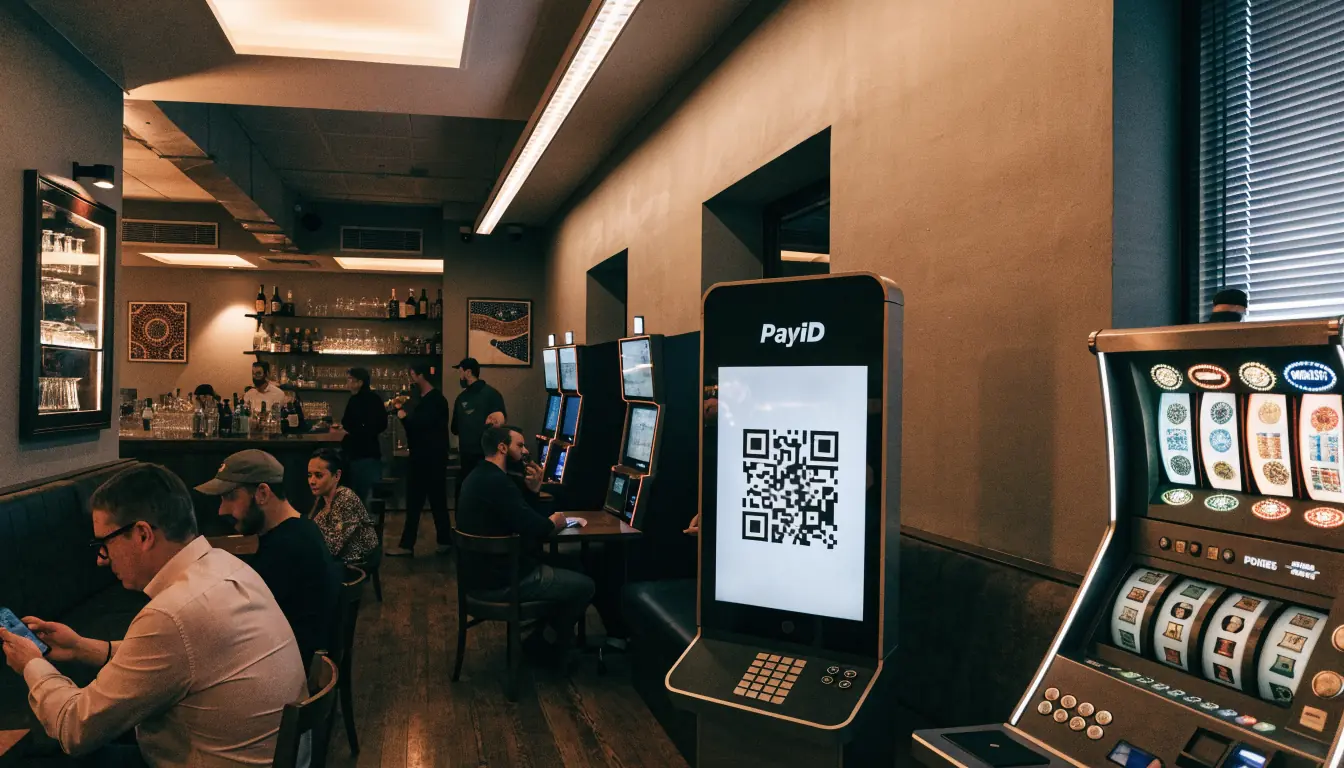

Table: Factors that affect session outcomes versus factors that do not
| Factor | Affects long-run mathematical odds | Affects session experience or duration |
|---|---|---|
| Time since last payout on the same machine | No | No |
| Size of the accumulated jackpot pool | No | No |
| Bet size per spin | No | Yes — smaller bets extend playtime on a fixed bankroll |
| Machine volatility | No | Yes — changes frequency and size of returns within a session |
| Reading the paytable before playing | No | Yes — determines whether top-tier prizes are even accessible at current bet level |
| Setting a session limit in advance | No | Yes — determines whether losses are bounded |
| Chasing losses with higher bets | No | Yes, negatively — increases exposure without improving odds |
| Using account-based tracking of wagered/returned totals | No | Yes — improves accuracy of a player’s sense of their own position |
Common assumptions that do not hold up
A number of beliefs about pokies circulate widely among players despite having no basis in how certified machines are built or regulated:
- A machine that has not paid out recently is “due.” Random number generation has no memory of prior outcomes. Each spin is independent.
- Playing at a particular time of day changes the odds. Return-to-player design is fixed at certification and does not vary by time, day, or venue traffic.
- Stopping the reels manually changes the outcome. The result is determined at the moment the spin is initiated; the visual stopping of reels, whether automatic or manually triggered, displays a predetermined result.
- A near-miss (two matching symbols and one adjacent) indicates the machine is close to paying out. Near-misses are a visual outcome like any other and carry no statistical significance for the following spin.
- Higher bets improve the odds of triggering a bonus feature, beyond what the paytable specifies. Feature trigger rates are fixed in the game’s design; higher bets only change the value of a win if one occurs, except where a stated bet threshold is a specific eligibility condition disclosed in the paytable.
None of these assumptions are corrected by intuition or by observing a run of spins, because a comparatively small number of spins is not enough to distinguish a fair machine from an unfair one by observation. Certification and regulatory testing, not personal pattern recognition during play, are what establish that the odds a machine advertises match the odds it delivers.
Practical steps that follow directly from these facts
- Set a session budget before beginning, and treat it as the total exposure for that session rather than a target to recover from if it runs low early.
- Read the paytable and any bonus-trigger conditions before placing the first bet, particularly on machines with multiple feature types or linked jackpots.
- Match volatility to intent: lower-volatility machines for longer sessions on a fixed budget, higher-volatility machines only when accepting a lower probability of any return during the session.
- Where account-based or transparent pokies are available, use the visible running total as a real-time check on actual position, rather than relying on memory of wins and losses.
- Treat any pre-commitment or limit-setting tool offered by the venue as a binding decision made before play begins, not a suggestion to be revised mid-session.
- Recognise that no observed pattern during a session — hot streaks, cold machines, near-misses — provides information about what the next spin will do.
The scale of aggregate losses across Australian pokies, and the classification of poker machines as the most harmful gambling format in NSW, both point to the same underlying reality: the mechanics of individual play are fixed and cannot be gamed, and the meaningful decisions available to a player are entirely about structuring exposure — bankroll, time, and choice of game type — rather than reading or predicting the machine itself.
Effective Strategies and Common Tricks for Playing Pokies in 2026
Strategy discussions around pokies tend to conflate two different problems: how a player manages a session, and how the machines themselves are monitored and regulated. The two are connected in practice, because oversight mechanisms shape what venues expect from players and what behaviour draws attention. This section separates the practical from the regulatory, and addresses common tricks that circulate among players — some of which are simply misconceptions, and others that are red flags for authorities rather than genuine advantages.
Money Laundering Risk
Using large cash insertions with minimal play or structuring cash‑outs can trigger AML investigations and legal consequences.
Common Tricks: What Actually Changes the Odds
A persistent category of "pokies tricks" involves rituals — timing sessions around particular hours, choosing machines by their physical location in a venue, or alternating bet sizes to influence an outcome. None of these interact with how an electronic gaming machine determines results. There is no verified mechanism by which session timing, seat choice, or wager patterning alters the probability of a win on any individual spin.
Where a strategy can meaningfully affect outcomes over time, it tends to concern money management rather than gameplay technique: deciding a loss limit before starting, treating a session budget as fixed rather than reactive, and stopping once that budget is reached. These are behavioural controls, not statistical ones — they do not change the machine’s built-in mathematics, but they change how much a player is exposed to variance in a single sitting. That distinction matters because it is often blurred in generic "tips and tricks" content, where budgeting advice is presented alongside pattern-chasing advice as if the two carried equal weight.
A related misconception concerns cashless and account-based pokies, sometimes referred to as transparent pokies. Their primary function is to improve traceability of transactions for operators and regulators, not to alter payout behaviour. Players sometimes assume that account-based systems change odds or introduce new winning patterns; there is no basis for that assumption in how these systems are described. Their relevance to a player is administrative — spending is logged against an account rather than settled in cash — which has implications for personal budgeting but not for game outcomes.

Why Pokies Attract Regulatory Attention Beyond Player Behaviour
Any discussion of practical approaches to pokies in 2026 has to account for the fact that these machines are treated as a significant money-laundering risk by regulators and public inquiries. This is not a marginal detail — it shapes venue procedures that ordinary players encounter directly, including identification checks, limits on cash handling, and monitoring of redemption patterns.
The underlying reason is structural. Pokies involve a high volume of cash transactions with limited traceability, which makes them a convenient vehicle for moving illicit funds. Public inquiries and sector guidance have consistently flagged pokies as a major area of anti-money-laundering (AML) risk, distinct from the harm-minimisation concerns that dominate most consumer-facing discussion of the sector.
Understanding this context is useful for players for a practical reason: some of the same behaviours that regulators treat as suspicious can also look, superficially, like "smart" tricks circulating in player folklore. Recognising the difference protects a player from adopting a habit that will draw scrutiny rather than deliver any real advantage.
Money Laundering Typologies Involving Pokies
Several typologies recur in AML guidance concerning electronic gaming machines:
- Cash placement with minimal play — large sums of cash are inserted into a machine, followed by little or no actual gameplay, before the funds are withdrawn. The machine is used as a conversion point rather than as entertainment.
- Purchasing winning tickets — an individual buys a winning ticket or voucher from another patron, effectively laundering cash through what appears to be a legitimate payout.
- Structuring across venues — cash is moved through multiple venues in smaller amounts, avoiding the appearance of a single large transaction at any one location.
These typologies are documented as recurring patterns in sector guidance rather than isolated incidents, and they explain why venues operating a significant number of machines are subject to compliance obligations well beyond simple age verification.
Red Flags Venues and Regulators Monitor
Because pokies present this level of AML exposure, venues and compliance systems are trained to watch for specific indicators. A player unfamiliar with this context might interpret some of these behaviours as clever tactics; in a compliance setting, they are treated as warning signs.
| Red flag | What it looks like in practice |
|---|---|
| Large cash insertions with minimal play | Cash is fed into a machine and withdrawn shortly after, with little genuine gameplay in between |
| Frequent small redemptions across venues | The same individual cashes out modest amounts repeatedly at different locations |
| Multiple patrons acting together | Several people coordinate to move cash through machines, rather than playing independently |
| Refusal of identification or use of multiple player cards | A patron avoids verification or spreads activity across more than one card to obscure a single identity |
| Unusual redemption patterns relative to venue averages | Cash-out behaviour that deviates noticeably from what is typical for that venue |
| Access to more cash than expected for the customer profile | Spending inconsistent with the apparent financial profile of the individual |
| Depositing higher values and larger amounts of cash | Transaction sizes that stand out against ordinary patron behaviour |
None of this list describes a technique a player should attempt. It describes what compliance staff and monitoring systems are trained to flag, and it is included here because some circulating "pokies tricks" — moving between venues to cash out in smaller amounts, for instance — overlap directly with structuring, one of the documented typologies above. What looks like a workaround to a player is, in a compliance framework, a documented pattern associated with illicit activity.
Controls That Shape the Player Experience
Customer verification and patron profiling are the primary controls used to manage this risk. In practical terms, this means players may be asked for identification at points that feel unrelated to the act of gambling itself — particularly around larger cash transactions or unusual redemption activity. This is not arbitrary friction; it corresponds to the same red-flag indicators outlined above.
Cashless and account-based systems are positioned within this framework as a traceability improvement rather than a player convenience feature, though they function as both. An account-based pokie generates a transaction record automatically, which reduces the anonymity that cash-based play offers and, by extension, reduces the viability of the typologies described above. Players encountering account-based systems in 2026 should understand this as the underlying rationale, rather than a change designed around player comfort.
Exceeding Limits
Ignoring pre‑commitment limits can result in significant financial loss and breach venue policies.
Scale of the Issue
One source estimates that Australia holds around 18% of the world’s poker machines, a figure that varies depending on how the underlying population of machines is measured and which markets are included in the comparison. It is worth treating that figure as an indicative estimate from a single source rather than an settled industry benchmark, given how much the underlying counting methodology can shift the result. What is consistent across public inquiries and sector guidance, regardless of the precise global share, is the conclusion that the concentration and cash-intensity of pokies in Australia make them a persistent focus for AML oversight.
Practical Takeaways
Setting aside mechanisms that do not affect outcomes, a realistic approach to pokies in 2026 rests on a small number of points grounded in how the machines and their oversight actually function:
- Session outcomes are not influenced by timing, seat selection, or bet-size rituals; treating these as “tricks” is a misconception rather than a strategy.
- Budgeting decisions made before play begins are the only lever a player directly controls; they affect exposure to loss, not the machine’s underlying odds.
- Identification requests and monitoring of cash patterns are a function of AML obligations, not an inconvenience specific to any one venue.
- Behaviours that resemble clever workarounds — such as spreading cash-outs across multiple venues — can overlap with documented laundering typologies and are treated accordingly by compliance systems, regardless of the player’s actual intent.
- Cashless and account-based pokies exist primarily to improve traceability; any perceived effect on gameplay is not supported by how these systems are described in regulatory or sector material.
Approaching pokies with this distinction in mind — between what changes a session’s financial exposure and what merely shapes how that session is monitored — offers a more accurate picture than the folklore of tricks that typically surrounds these machines.
Is online gambling legal in Australia?
The Interactive Gambling Act, passed on 28 June 2001, governs online gambling in Australia, while pokies operate widely in pubs, clubs, and casinos under domestic regulation.
What are the key limits on providing services to customers?
Operators are required to implement AML controls such as customer verification and patron profiling, especially to detect red flags like large cash insertions with minimal play or frequent small redemptions across venues.
Are my personal and financial details safe?
Cashless and account-based pokies improve traceability and safety, but because high cash volumes make these machines attractive for money laundering, venues must strictly enforce customer verification and profiling controls.
Published by the Pokies Pro team.