
Best Casino in Tasmania: Wrest Point and Country Club Guide

Table of Contents
- Casino Hotels in Tasmania: What to Expect
- Poker Rooms and Gaming Areas at Tasmanian Casinos
- Parking and Accessibility Options for Casino Visitors
- Accommodation Near Tasmanian Casinos
- Contact Details and Customer Service Channels
- Dining, Buffets, and Employment Opportunities
- Casino Openings, Developments and Upcoming Events
- Restaurant Options Within and Around the Casinos
- Spa, Wellness, and Additional Amenities
- Food Courts and Pool Facilities Overview
Casino Hotels in Tasmania: What to Expect
Tasmania’s two licensed casino properties, Wrest Point in Hobart and the Country Club in Launceston, operate as integrated resorts rather than standalone gaming floors. Hotel accommodation forms a substantial part of their business, and the rooms are managed as conventional hospitality product: booked through standard reservation systems, priced according to season and occupancy, and subject to the same hotel-industry standards as any other Tasmanian property. Guests who stay on-site are not required to gamble, and reception staff generally do not distinguish between guests visiting for business, leisure or a wedding function and those attending for the gaming floor.
Room standards and categories
Both properties offer tiered room categories, typically ranging from standard rooms through to suites with harbour or golf-course views depending on the site. Rooms are furnished to a standard consistent with mid-to-upper-tier Australian hotels: ensuite bathrooms, climate control, television and work desks are standard inclusions. Suite-level rooms usually add separate living areas and premium views. Because these hotels are built as part of a larger entertainment precinct, room stock tends to sit alongside convention space, function rooms and event facilities, meaning the same hotel might host a conference one week and a wedding party the next.
Since Tasmanian players rely on offshore-licensed platforms rather than a local casino, it helps to see how these operators stack up on licensing, welcome offers and deposit terms before signing up.
License: Curacao OGL/2024/1335/0780 · Bonus: up to A$1,000 + 150 free spins, wager-free · Min. deposit: EUR 20 Holds a Curacao OGL license and offers a wager-free welcome bonus of up to A$1,000 plus 150 free spins, with a low EUR 20 minimum deposit making it accessible for smaller bankrolls.
License: Curacao Gaming Control Board OGL/2023/176/0095 (Hollycorn N.V.) · Bonus: up to A$1,500 + 200 free spins across 3 deposits Licensed by the Curacao Gaming Control Board under Hollycorn N.V., it spreads its up to A$1,500 plus 200 free spins offer across three deposits, giving players a staged welcome package.
Bonus: 240% up to A$4,100 + 300 free spins Stands out for a sizeable 240% match bonus worth up to A$4,100 alongside 300 free spins.
License: Curacao Gaming Control Board · Bonus: up to A$5,000 + 400 free spins Operates under a Curacao Gaming Control Board license and backs it with a generous welcome offer of up to A$5,000 plus 400 free spins.
License: Curacao · Bonus: up to A$10,000 multi-stage + 500 free spins · Min. deposit: A$20 (POLi) A Curacao-licensed casino with a multi-stage bonus reaching up to A$10,000 plus 500 free spins, and a low A$20 minimum deposit via POLi for easy entry.
License: Curacao eGaming (Dama N.V.) · Bonus: up to A$10,000 + 180 free spins, 40x wagering Licensed through Curacao eGaming under Dama N.V., it offers up to A$10,000 plus 180 free spins with clearly stated 40x wagering requirements.
License: Curacao · Bonus: 100% up to A$500 + 200 free spins, 10x wagering · Payout speed: crypto 30-60 minutes, fiat 1-5 days · Min. deposit: A$10 Curacao-licensed with a 100% match up to A$500 plus 200 free spins at a manageable 10x wagering, and fast crypto payouts of 30-60 minutes alongside a low A$10 minimum deposit.
License: Curacao · Bonus: up to A$2,000 A Curacao-licensed operator offering a welcome bonus of up to A$2,000 for new players.
License: Curacao Gaming Control Board OGL/2023/176/0095 (Hollycorn N.V.) · Bonus: up to A$11,000 + 300 free spins (code NEO100) Licensed by the Curacao Gaming Control Board under Hollycorn N.V., it offers one of the larger bonuses on this list at up to A$11,000 plus 300 free spins via a bonus code.
License: Tobique Gaming Commission · Bonus: up to A$8,000 + 400 free spins across 4 deposits · Payout speed: crypto ~10-15 minutes, fiat 1-5 days · Min. deposit: A$30 Holds a Tobique Gaming Commission license and offers up to A$8,000 plus 400 free spins across four deposits, with notably quick crypto payouts of around 10-15 minutes and a A$30 minimum deposit.
Bookings are seasonal in nature, and rates fluctuate with demand from the broader Tasmanian tourism calendar, including festival periods and school holidays. No fixed pricing figures are published on a permanent basis by either property, so travellers comparing options should treat any quoted rate as a snapshot rather than a fixed benchmark.
Services distinct from the gaming floor
The hotel side of these properties runs largely independent of the casino operations, with its own front desk, concierge and housekeeping teams. Typical services include:
- Front desk and concierge assistance for local tourism bookings, transfers and general enquiries.
- Housekeeping and turndown service consistent with standard hotel operations.
- Business centre or meeting-room access, relevant for corporate guests unconnected to gaming activity.
- Loyalty or membership programs that may apply across accommodation, dining and entertainment, separate from any gaming-specific rewards.
Because the properties combine hotel, function and entertainment infrastructure under one roof, guests booking a room are also within walking distance of theatres, bars and event spaces without needing to cross through a gaming area to reach them, depending on the property’s internal layout.
Age and access considerations at check-in
Reception staff at both properties are required to apply the same age threshold used across the gaming floor: no one under 18 may access casino offers or gaming areas, and identification checks apply accordingly. This age rule does not extend to hotel check-in itself, where standard hospitality practice applies, but families booking rooms within an integrated resort should expect that any casino-branded facilities, promotions or loyalty perks tied to gaming remain restricted to adult guests.
Why hotel quality matters independently of the gaming offer
Gambling participation in Australia is broad — close to three-quarters of adults reported gambling in the past year, and more than a third gambled weekly, according to national data from 2022. That level of everyday participation means casino resorts in Tasmania draw a mixed clientele: some guests are booking a room purely for its location, view or conference facilities, with no intention of visiting the gaming floor at all. Others treat the hotel as a base for an evening on the tables or the pokies. The hotel product itself does not change based on this intent, and reviewing accommodation quality on its own terms — bedding, room service, cleanliness, staff responsiveness — remains a separate exercise from evaluating the gaming offer.
Gambling Loss Risk
Australians collectively wagered a large sum and recorded substantial losses in the 2022–23 financial year, so a hotel stay at a casino resort carries no obligation to gamble but the risk of financial loss remains real.
Given that Australians collectively wagered a large sum and recorded substantial losses in the 2022–23 financial year, at a national level, it is worth noting that a hotel stay at a casino resort carries no obligation or expectation to gamble, and the accommodation experience can reasonably be assessed independently of it.
What to check before booking
- Confirm whether the room rate includes access to any non-gaming facilities such as pools or spa areas, since inclusions vary by package.
- Check cancellation and amendment terms directly with the property, as these are set by the hotel rather than by any gaming regulator.
- Ask whether the room category includes views over the casino precinct itself or over surrounding parkland and water, since layouts differ materially between the Hobart and Launceston properties.
- Verify that any advertised loyalty benefits apply to the room booking itself, rather than being contingent on gaming activity.
Accommodation booked through these integrated resorts functions, in practice, as a standard hotel stay with an adjoining entertainment precinct — not as an extension of the gaming floor itself.
Poker Rooms and Gaming Areas at Tasmanian Casinos
Land-based casino floors in Tasmania separate poker from the broader gaming area, a distinction that matters for anyone comparing what a venue actually offers against what general marketing material suggests. A gaming floor with pokies, table games and a sports bar is not the same product as a dedicated poker room, and the two are typically staffed, scheduled and priced differently even within the same building.
What separates a poker room from the gaming floor
A poker room operates on a different logic than the rest of the casino. Table games and pokies are structured against the house; poker pits players against each other, with the venue taking a rake or table fee rather than acting as the counterparty. This changes the pace of play, the social dynamic at the table, and the hours during which tables are actually spread — dedicated poker rooms tend to run tournament series and cash games on a published schedule rather than being open continuously in the way a pokies floor is. A sports bar attached to a casino, by contrast, is a separate amenity again: built around wagering and broadcast screens rather than table play, and not to be confused with either the poker room or the main gaming zone.
Tournament formats
Venues that run organised poker typically offer a mix of formats rather than a single structure:
- Freezeout tournaments — a fixed buy-in, no re-entries once a player is eliminated.
- Re-entry or rebuy events — players can buy back in during a defined early period.
- Cash games — ongoing tables with no set schedule, buy-in and cash-out at will.
- Satellite events — smaller buy-in tournaments that award seats into larger scheduled events.
Which of these formats a given Tasmanian venue actually runs on a given night is not something that can be generalised across the state — schedules vary by venue and by season, and no single published calendar covers all rooms. Anyone planning a visit around a specific tournament format should treat venue-specific confirmation as necessary rather than optional.
How gaming areas get compared
Where this site’s broader casino rankings apply — covering online operators rather than the physical floor of any single Tasmanian venue — the same weighted method is used every time. Rankings are recalculated weekly, and the formula weights bonus generosity at 30%, payout reliability at 25%, game library breadth at 20%, customer support responsiveness at 15%, and user-submitted feedback at 10%. Each listing carries a separate score for bonus transparency, cashout speed, customer care and licensing integrity. Reviewers deposit at least A$300 at each site under evaluation and test the withdrawal process directly rather than relying on stated terms alone.
That method describes how online operators are scored on this site; it says nothing about the internal layout, seat count or tournament rotation of any land-based poker room in Tasmania, and the two should not be conflated. A physical poker room’s quality is a function of table availability, dealer standards, and how often advertised tournaments actually run — none of which a bonus-weighted formula measures.
Distinguishing gaming zones in practice
For a visitor trying to work out what a Tasmanian casino actually contains, three things belong in three separate conversations:
- the gaming floor — pokies and house-banked table games, generally open on standard casino hours;
- the poker room — a discrete area with its own tournament and cash-game schedule, not identical to floor hours;
- the sports bar — wagering and broadcast facilities, functionally distinct from either.
Treating these as one undifferentiated "casino floor" tends to produce mismatched expectations, particularly for anyone travelling specifically for a poker series rather than general play. Confirming the current tournament calendar directly with the venue remains the only reliable way to know what is actually running on a given date, since no consolidated, independently verified schedule exists across Tasmanian venues.
Parking and Accessibility Options for Casino Visitors
Physical access to a land-based casino in Tasmania is governed entirely by state licensing and local council rules, which sit apart from the federal framework covering online gambling. This distinction matters because the two are often confused: the Interactive Gambling Act 2001 restricts online casino-style games such as pokies, blackjack and roulette from being offered to Australian residents by domestic operators, while the physical premises discussed here are licensed venues operating under state gaming law. Parking, transport and accessibility questions belong to the latter, not the former, and none of what follows has any bearing on the legality of online play.
Parking Information
Both Tasmanian casino venues provide dedicated self‑parking and limited valet spaces; parking is often bundled with hotel rooms but may be charged separately during peak evenings.
On-site parking
Tasmanian casino venues typically provide dedicated parking areas for patrons, generally split between general self-parking and a smaller allocation for valet service at the main entrance. Valet arrangements are usually concentrated around peak evening hours and major events, when self-parking areas fill first. Visitors arriving during daytime hours or on weekdays tend to find parking more readily available than during weekend evenings, when function bookings and entertainment schedules draw larger crowds.
Some venues also maintain overflow parking for coach groups and larger vehicles, reflecting the fact that Tasmanian casinos often double as function and event venues rather than gaming floors alone. Where a venue has hotel accommodation attached, parking is frequently bundled with the room booking rather than charged separately, though this varies by property and by season.
Accessibility services
Accessibility provisions at Tasmanian casinos generally follow the same standards applied to other licensed hospitality venues in the state: designated accessible parking bays close to entrances, step-free access to gaming floors and dining areas, and accessible restrooms. Staff at reception and information desks are typically the first point of contact for visitors requiring assistance, whether that involves mobility support, wayfinding, or arranging accessible seating in dining and entertainment spaces.
Venues that host live entertainment or conference facilities usually extend accessibility planning to those spaces as well, including accessible seating allocations for shows and events. Where accessibility needs are more specific — such as requirements around hearing loops or assistance animals — contacting the venue directly ahead of a visit remains the most reliable way to confirm what is available, since public information on these specifics is not always detailed.
Public transport links
Tasmanian casinos are generally accessible by road rather than rail, given the absence of passenger rail services in the state. Local bus routes connect some casino locations to nearby town centres, though frequency and coverage depend heavily on the specific location and time of day. Visitors travelling from Hobart or Launceston airports typically rely on taxis, rideshare services, or pre-arranged transfers rather than public transit, particularly outside standard commuting hours.
Accessibility Reminder
Accessibility services such as designated bays, step‑free access and accessible restrooms are available, but visitors with specific needs should confirm details with the venue in advance.
For visitors without a private vehicle, checking transport options in advance is advisable, as regional and outer-suburban services in Tasmania tend to run less frequently than metropolitan routes on the mainland.
A note on scope
None of the parking, transport or accessibility arrangements described above extend to online gambling. It is worth stating plainly that no online casino operating from Tasmania, or anywhere else in Australia, can lawfully offer real-money slots, blackjack or roulette to Australian residents under the Interactive Gambling Act 2001. Separate reporting has also referenced an Interactive Gambling Act 1997 as the source of this prohibition; the two dates appear across different sources, and this discrepancy has not been resolved here. What is consistent across both versions is that the restriction applies to operators, not to individual players, who are not committing an offence by accessing offshore-licensed sites. Physical access logistics, by contrast, are a matter of venue management and state regulation, entirely separate from that federal framework.
Accommodation Near Tasmanian Casinos
Lodging options within walking distance of Tasmania’s casino properties range from on-site hotel towers to independent motels and short-stay apartments in the surrounding streets. This section covers the wider accommodation market around the casinos, separate from the casino-operated hotel facilities themselves. Availability and pricing shift with the season, with conference bookings and event weekends tending to compress supply in the immediate vicinity of each venue.
What Sits Within Walking Range
Beyond the casino’s own hotel rooms, nearby precincts typically include a mix of:
- Independent motels catering to short stays and business travel
- Serviced apartments suited to longer visits
- Boutique guesthouses in older, heritage-listed buildings common to Tasmanian cities
- Budget-oriented chain accommodation slightly further from the waterfront or CBD core
Proximity to the casino itself is rarely the only factor worth weighing. Guests booking outside the casino’s own property should also account for walking distance after dark, availability of transport links covered elsewhere in this guide, and whether breakfast or parking is bundled into the room rate rather than charged separately.
Why Pricing Context Matters
Room rates near casino precincts are not set in isolation. Gambling activity contributes materially to state and territory finances — gambling revenue accounted for 7.7% of state and territory taxation revenue in 2015–16 — and that fiscal relationship shapes how state governments approach licensing, land use and development approvals around casino precincts. Where a casino operates under a long-standing state licence, surrounding commercial development, including hotels and short-stay accommodation, tends to cluster more densely than in areas without a licensed gaming venue anchoring local tourism.
It is worth noting that regulation of gambling in Australia is not governed by one single statute or one single authority. Oversight is split between state and territory regulators, who license and monitor casino operations directly, and federal bodies. The Australian Communications and Media Authority (ACMA) enforces the Interactive Gambling Act 2001 at a federal level, though its remit concerns online gambling activity rather than the licensing of physical casino premises or the accommodation built around them. This division means that questions about local accommodation supply, zoning and pricing are matters for state-level authorities and local councils, not a national gambling regulator.
Winnings Tax Note
Gambling winnings are not taxed in Australia, so any amount won at the tables or on the gaming floor does not incur additional tax deductions.
A Note on Winnings and Budgeting
Visitors planning a stay around a gambling budget should be aware that gambling winnings are not taxed in Australia. This has no bearing on accommodation pricing itself, but it is a relevant point for anyone factoring a prospective win into their travel budget — any amount won at the tables or on the gaming floor is not subject to further deduction once collected.
Practical Considerations Before Booking
- Confirm whether a quoted room rate includes on-site parking, given that separate arrangements are covered in the parking and accessibility section of this guide
- Check cancellation terms closer to event dates, since casino precincts often host entertainment and conference activity that affects demand
- Compare on-site casino hotel rates against nearby independent options, as the two markets do not always move in parallel
- Ask directly about breakfast inclusion, as this varies widely between motels, serviced apartments and hotel-branded rooms in the same precinct
None of the above substitutes for checking current rates and terms directly with each property, particularly given how demand around these precincts can shift with the calendar of local events.
Contact Details and Customer Service Channels
Contact arrangements for Tasmania’s land-based casinos follow a standard structure: a general enquiries line, a reservations or hospitality desk, and an on-site guest services counter located near the main entrance or gaming floor. These channels handle bookings, venue directions, and general questions about facilities such as dining or accommodation. Specific phone numbers, email addresses and floor plans are best confirmed directly with each venue, as details change with renovations and staffing, and no independent public directory consolidates them for Tasmanian properties specifically.
What on-site help desks typically cover
Guest services counters at casino resorts generally deal with practical matters: checking membership or loyalty account details, resolving billing questions tied to hotel stays, and directing visitors to amenities elsewhere in the venue. Staff at these desks are not a substitute for a regulatory complaints process — they represent the operator, not an independent authority.
Regulatory oversight, not customer service
It is worth separating two different things that are often confused: the phone number for a casino’s front desk, and the regulatory bodies that oversee how gambling is conducted in Australia. These are not the same channel, and they do not serve the same function.
At the federal level, the Australian Communications and Media Authority (ACMA) enforces the Interactive Gambling Act 2001, the Commonwealth law governing how gambling services may be offered to Australian residents. ACMA’s role concerns compliance with that Act rather than day-to-day complaints about a hotel stay or a table game at a physical venue.
Regulator Contacts
For compliance issues, the Australian Communications and Media Authority (ACMA) oversees the Interactive Gambling Act, while the Northern Territory Racing Commission (NTRC) handles online betting regulation.
Online wagering sits under a separate arrangement. The Northern Territory Racing Commission (NTRC) functions as Australia’s de-facto regulator for online betting, since it licenses most of the national bookmakers operating under lower tax arrangements in that jurisdiction. This is distinct from land-based casino licensing, which falls to state and territory authorities rather than a single national body.
None of this extends to online casino games. It is illegal to offer online casino gambling to Australians, and there is no mechanism by which such an operation could be domestically licensed. Any contact number, email, or support channel presented online as belonging to a "licensed online casino" serving Australian residents describes something the law does not permit to exist in this market.
Practical guidance on reaching a venue
| Contact type | Typical purpose | Who operates it |
|---|---|---|
| Front desk / reservations | Bookings, general enquiries | The casino resort itself |
| Guest services counter | On-site assistance, membership queries | The casino resort itself |
| ACMA | Compliance with the Interactive Gambling Act 2001 | Federal regulator |
| NTRC | Licensing of online bookmakers | Territory regulator |
For anyone seeking support related to gambling harm rather than venue logistics, the appropriate first contact is a dedicated help service rather than a casino’s own customer desk, since the latter is not structured to provide independent counselling or intervention.
This section does not list specific phone numbers or email addresses for individual Tasmanian venues, since these details are not part of the verified information available here and change without consistent public notice. Readers seeking a direct line to a particular property should treat the operator’s own published contact page as the primary source, while understanding that oversight of gambling conduct itself rests with the regulators named above, not with the venue’s front desk.
Dining, Buffets, and Employment Opportunities
Tasmania’s two licensed casino resorts, Wrest Point in Hobart and the Country Club in Launceston, each operate buffet-style dining rooms as part of their broader hospitality offering. These buffets typically run morning sittings alongside à la carte breakfast service, catering to hotel guests and day visitors independent of the gaming floor. Buffet composition and pricing are set by the venues themselves and change seasonally, so figures published elsewhere should be treated as indicative rather than fixed. Breakfast service at both properties is generally positioned as a separate revenue stream from the casino operations proper, drawing custom from conference guests, tour groups and local diners who may never enter the gaming rooms at all.

An overview of how online casinos serving Australian players are compared, covering licensing, withdrawal speed,…
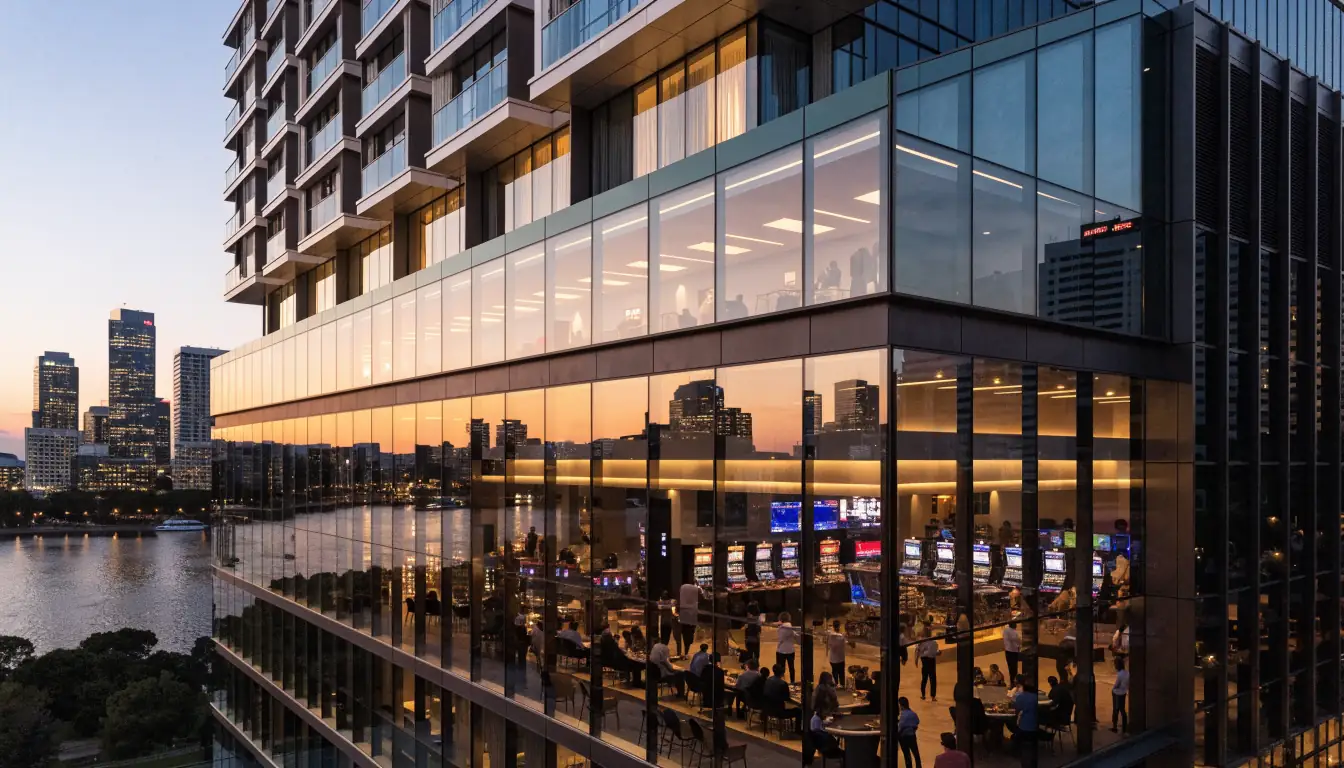
Overview of Brisbane's casino hotel towers, room tiers, stay-and-play packages, dining, parking and gym access…
Employment at these resorts extends well beyond dealers and gaming staff. Both properties function as integrated hospitality businesses, meaning vacancies regularly appear across kitchen, housekeeping, front-of-house, events and administrative roles alongside positions in the gaming department itself. Anyone researching current openings should check each resort’s own careers page directly, since neither casino publishes a centralised jobs board and third-party listing sites vary in how current their postings are. Roles connected to gaming operations — croupiers, cage staff, surveillance — are subject to probity checks consistent with Tasmania’s gaming licensing framework, which sits apart from standard hospitality recruitment.
Employment and the broader social context
Casino resorts are significant regional employers, but hiring for gaming-facing roles cannot be considered in isolation from the social impact data attached to the wider industry. Nationally, an estimated 80,000 to 160,000 Australian adults experience significant gambling problems, a figure equivalent to roughly 0.5–1.0% of the adult population. This matters for staff working the gaming floor, cage, or customer service desks, since interaction with distressed patrons is a documented feature of frontline casino work, not a hypothetical risk.
Age-related exposure is a further consideration relevant to any venue employing staff in front-of-house or gaming-adjacent roles. Approximately 30% of Australians aged 12 to 17 report having gambled in some form, and this rises sharply to nearly 46% among 18–19-year-olds — the age bracket from which casinos often recruit for entry-level hospitality and gaming positions. Staff in this cohort are themselves part of a demographic with comparatively high gambling participation, which is one reason responsible service of gambling training is a standard requirement for new hires rather than an optional add-on.
Staff Welfare Risk
Around 30 % of Australians aged 12‑17 gamble, and up to 46 % of 18‑19‑year‑olds do so, meaning casino staff may frequently encounter patrons with problem‑gambling behaviours.
None of this is disclosed by casinos as a condition of employment in job advertisements, and it would be inaccurate to suggest either Tasmanian property publishes internal data linking its own staffing to problem gambling rates. The connection is inferred from national statistics rather than venue-specific reporting, and readers evaluating either the dining operations or the employment opportunities at these resorts should treat the two as related but separately regulated aspects of the same business: one governed by standard hospitality and food safety rules, the other by gaming licence conditions and harm-minimisation obligations that apply irrespective of whether a given role involves direct contact with gambling activity.
Casino Openings, Developments and Upcoming Events
Public information on renovation timelines, expansion plans, and reopening schedules for Tasmania’s land-based casino venues is not consolidated in any single official register available to the public. Announcements of this kind typically come from the venues themselves or from state licensing authorities on a case-by-case basis, which means claims about specific opening dates, refurbishment budgets, or completion windows found on third-party sites should be treated with caution unless they cite the venue or regulator directly.
What can be stated with confidence concerns the legal environment in which any such development takes place. Tasmania’s licensed casinos operate as physical, land-based venues under state gaming law. This distinguishes them entirely from online casino gambling, which remains prohibited at the federal level under the Interactive Gambling Act 2001. No operator, in Tasmania or elsewhere in Australia, holds a domestic licence to offer real-money online casino games such as pokies, roulette, or blackjack over the internet, and none can lawfully obtain one. Any news of a "casino reopening" or "new casino development" in Tasmania therefore refers to a physical premises — its gaming floor, hotel wing, or entertainment facilities — not to an online product, and no legitimate announcement will suggest otherwise.
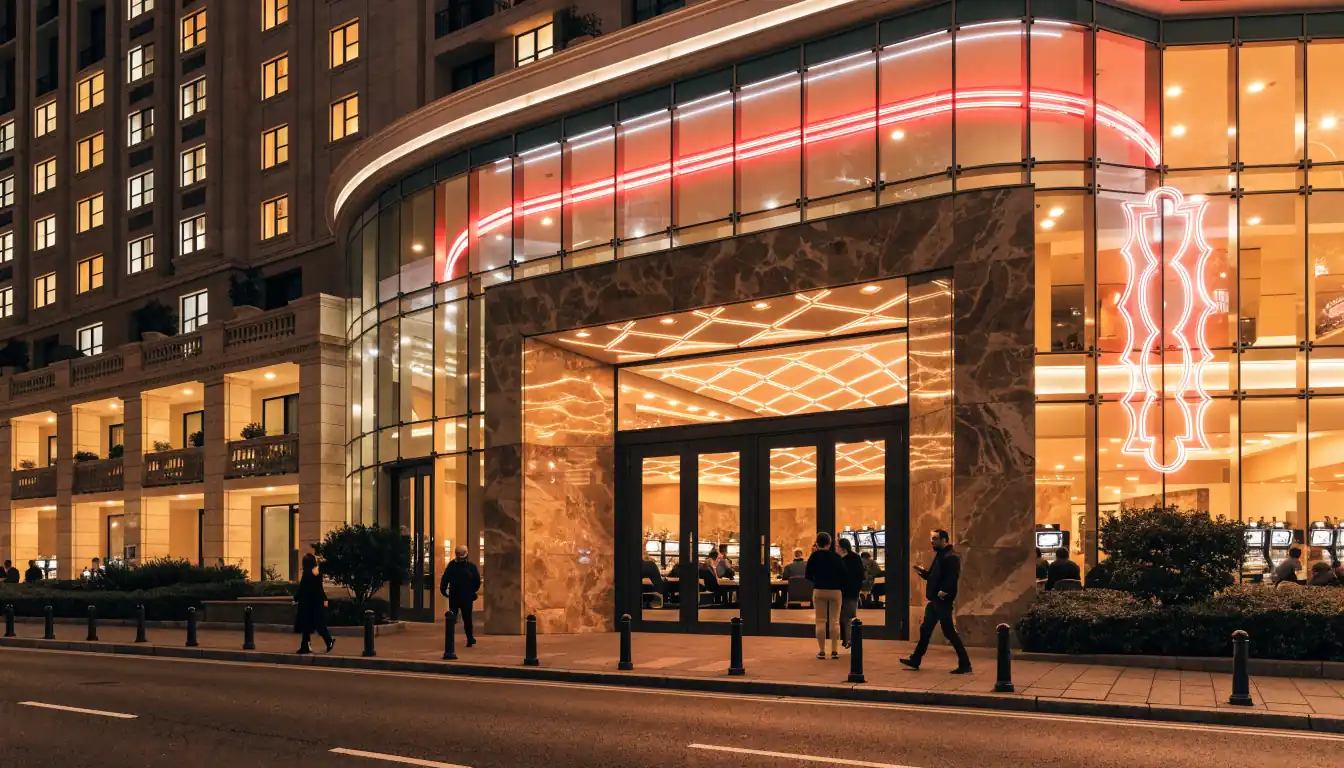
Overview of Victoria's casino hotel tiers, gaming floor access, dining options, parking and nearby accommodation…
An overview of Canberra's casino-hotel complex: room tiers, gaming floor access, dining venues, parking and…
Entertainment and scheduled events
Casino venues in Tasmania function as multi-purpose entertainment complexes, and scheduled events — live music, comedy, seasonal functions — are generally published through the venue’s own communications rather than through gambling-specific channels. Because these events sit outside the gaming floor itself, details on dates, ticketing, and capacity are best confirmed directly with the venue closer to the date, rather than relied upon from aggregated listings.
Sports and racing wagering distinct from casino games
It is worth separating casino developments from the wagering market more broadly. Online sports betting and racing wagering are legal in Australia and regulated under state and territory licences, operating under a framework entirely separate from casino gaming. A Tasmanian venue’s physical casino floor, and any development or renovation affecting it, has no bearing on the legality or availability of online sports betting, which continues under its own licensing regime regardless of what happens to on-site gaming facilities.
What remains unconfirmed
- Specific timelines for any renovation or expansion project at Tasmanian casino venues are not published in a verifiable public source at the time of writing.
- Details of newly announced gaming areas, capacity changes, or structural developments cannot be confirmed without direct reference to the operator or the relevant state gaming authority.
Readers seeking current, dated information on a specific venue’s development plans or event calendar are better served consulting the venue’s own official statements than relying on secondary summaries, given the absence of a centralised public register tracking these changes across Tasmania’s casino sector.
Restaurant Options Within and Around the Casinos
Restaurant precincts attached to Tasmania’s casino properties are typically organised by cuisine and occasion rather than as a single dining hall, distinguishing them from the buffet and food-court formats covered elsewhere. A casino restaurant precinct commonly includes an à la carte fine-dining room, a casual grill or bistro, and at least one restaurant with a specific regional or international cuisine focus — Asian, Mediterranean, or steakhouse concepts are the most frequently represented styles at large Australian casino resorts.
Cuisine styles
Fine-dining rooms within these precincts generally emphasise Tasmanian produce — seafood, aged beef, and local dairy or produce pairings — reflecting the island’s reputation as a food-and-wine destination independent of its gaming industry. Casual bistros and grills serve a broader, less formal menu intended for guests moving between gaming floors and other amenities, while dedicated ethnic-cuisine restaurants operate on separate hours and often require booking, particularly on weekends when function and event traffic increases.
Offers à la carte Tasmanian produce, often requiring reservations and located within the gaming precinct.
Serves quicker, everyday meals for guests moving between the hotel and gaming areas.
Operates outside the casino licence, has its own rules and typically admits all ages.
Age restrictions
Access rules differ by venue location rather than by cuisine. Restaurants situated on or adjacent to the casino gaming floor generally apply an 18-plus entry policy consistent with the minimum legal age to access casino offers, meaning families with children are usually directed to venues positioned away from the gaming areas, such as ground-floor cafés or hotel-lobby dining rooms. Restaurants physically separated from the gaming floor, including those reached without crossing gaming areas, typically admit patrons of all ages, though supervision requirements and evening cut-off times for minors can still apply after a certain hour. Prospective diners with children should confirm entry conditions directly with the venue before booking, since signage and staff practice — not a published statewide rule — determine which specific rooms are age-restricted.
On-site versus nearby options
A practical distinction exists between restaurants operated directly by the casino resort and independent restaurants located nearby but outside the property. On-site restaurants are subject to the venue’s own licensing conditions and house rules, including the age-restriction practices noted above. Nearby independent restaurants, while benefiting from casino foot traffic, operate under standard hospitality licensing unconnected to the casino’s gaming licence and are not bound by its internal access policies. This matters for readers comparing dining plans, since an off-site restaurant advertised as "at the casino precinct" may not carry the same entry conditions as one physically inside the gaming resort.
What falls outside this section
Menu pricing, opening hours, and table-reservation systems are managed independently by each restaurant operator and are not published in any consolidated regulatory source, so no consolidated figures are given here. Matters of alcohol service and responsible-service-of-gambling signage inside dining areas fall under state liquor and gaming oversight rather than the Commonwealth framework — the Australian Communications and Media Authority’s role is confined to enforcing the Interactive Gambling Act 2001 for online interactive gambling and has no bearing on restaurant licensing or food service standards. Readers researching wagering options connected to dining lounges should also note that live in-play betting conducted online is prohibited under that same federal law, though phone-based live betting remains lawful — a distinction relevant to any sports-viewing lounge attached to a restaurant precinct, but separate from the cuisine and seating information covered above.
Is parking included with my hotel booking?
It varies by property and season; some rooms include parking while others charge separately.
Can I bring children to the casino restaurants?
Restaurants that are physically separate from the gaming floor usually admit children, but those attached to the gaming area often enforce an 18+ policy.
Are casino winnings taxed in Australia?
No, gambling winnings are not subject to income tax for Australian residents.
Spa, Wellness, and Additional Amenities
Tasmania’s land-based casino resorts, at Wrest Point in Hobart and Country Club in Launceston, house spa and wellness facilities that operate independently of the gaming floor, both physically and in terms of staffing and booking systems. Guests can arrange treatments, use pool and relaxation areas, or attend a wellness appointment without passing through or engaging with any gambling area of the property.
These wellness offerings sit under the accommodation and leisure arm of each resort rather than the licensed gaming operation. Treatment menus at Tasmanian casino resorts typically follow the conventions of standalone day spas — massage, facials, and body treatments — booked through hotel reception or a dedicated spa desk rather than the casino cage or gaming reception.
Dress Code
Dress requirements differ by zone within the same property. Spa and pool areas generally apply standard leisure-wear expectations consistent with any hotel wellness facility. Gaming floors, by contrast, tend to enforce a smarter, neat-casual standard, with enforcement typically stricter in the evening and around table games than in daytime pokies areas. Guests moving between a spa appointment and the casino floor should expect to change, since swimwear, gym attire and thongs (flip-flops) are commonly declined at gaming area entrances even where they are acceptable poolside.
What Sits Alongside the Spa
Beyond treatment rooms, the amenity mix at these resorts generally includes:
- Indoor and/or outdoor pool access for hotel guests
- Fitness or gym facilities
- Bars and lounge areas, some overlooking the gaming floor and others separate from it
- Function and event spaces used for purposes unrelated to gambling
Bar service at Tasmanian casinos is split between venues attached to the gaming floor and those positioned within the hotel or leisure precinct, with the latter operating on standard hospitality hours rather than gaming-floor hours.
A Note on Scope
None of these wellness or leisure services constitute, or are connected to, online gambling of any kind. It is worth stating plainly that no online casino — spa-branded or otherwise — can lawfully offer slots, blackjack, roulette or poker to residents of Australia. Sources on the underlying legislation disagree on the year: some cite the Interactive Gambling Act 1997 as the provision prohibiting these online casino games for Australian residents, others attribute the same prohibition to the Interactive Gambling Act 2001. Whichever date is correct, the effect is consistent — online casino-style gaming remains prohibited nationally, and it is not something a physical resort’s wellness or amenity offering has any bearing on. Any wellness or lifestyle content associated with a casino brand online should not be read as an invitation to gamble through that channel.
Covers Adelaide Casino's hotel, gaming floors, dining, spa, parking and event calendar within the North…
Food Courts and Pool Facilities Overview
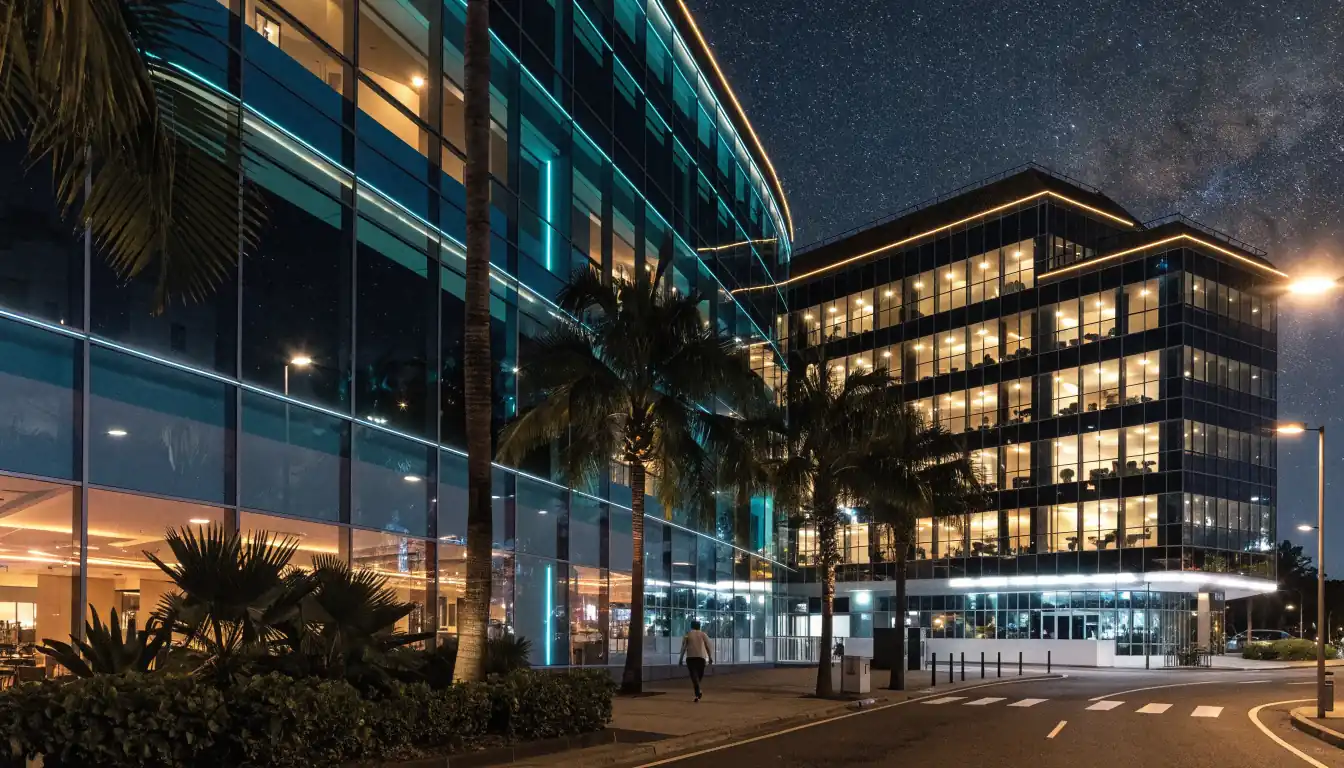
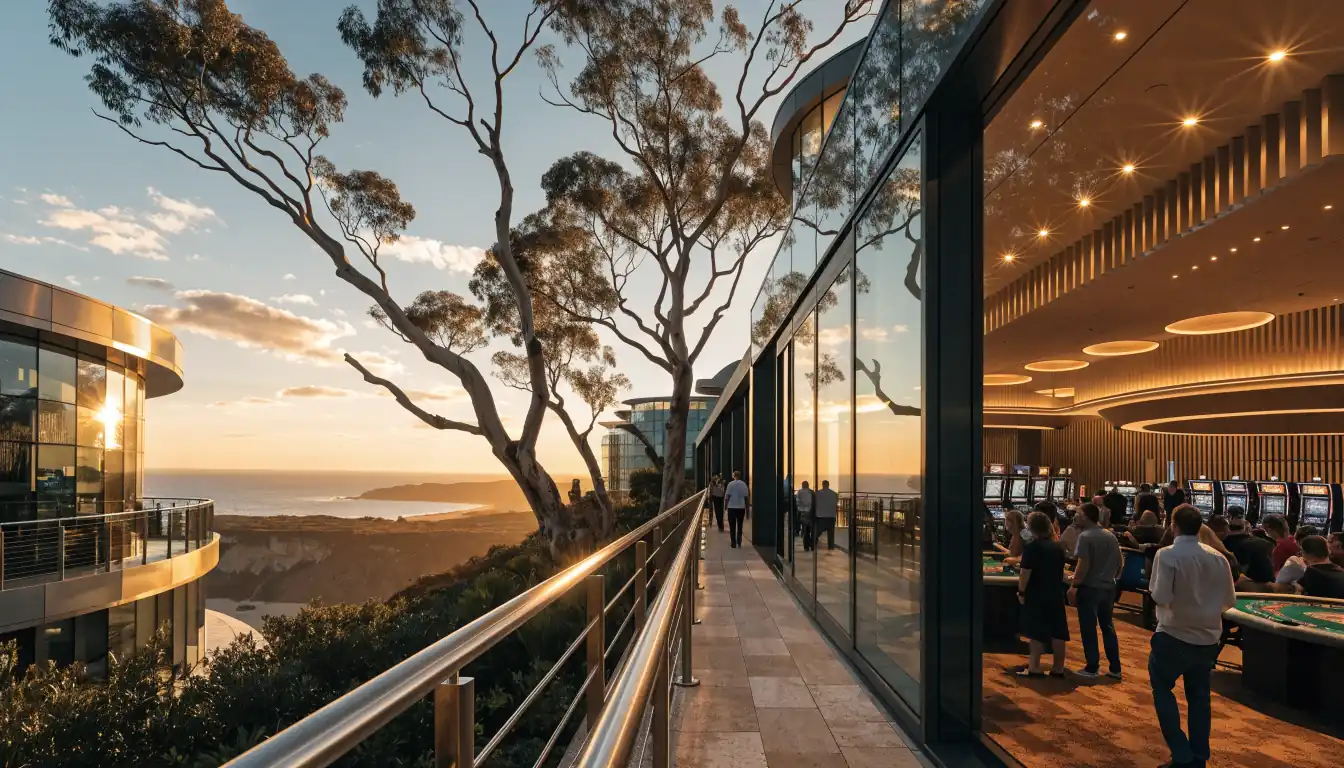
Casual dining and recreational facilities at Tasmanian casino properties operate separately from the full-service restaurants covered elsewhere. Food courts typically offer quick-service counters suited to short breaks between gaming sessions or between other on-site activities, catering to guests who prefer a faster, less formal meal than a sit-down restaurant provides.
Pool facilities, where available, function as a recreational amenity rather than an extension of the gaming floor. These areas are generally positioned within the accommodation or leisure precinct of a casino resort, separate from poker rooms, gaming zones, and dining venues detailed in other sections of this overview.
Neither food courts nor pool areas carry gambling-related terms or conditions, and their use does not depend on gaming activity. Access is generally tied to hotel accommodation or general admission to the resort premises rather than to participation in casino games.
It is worth noting that no publicly verified operational details—such as opening hours, seasonal availability of pool facilities, or the specific vendors present in food courts—are consolidated in official sources reviewed for this overview. Prospective visitors are advised to confirm current facility availability directly with the venue before planning a visit, particularly if these amenities are a deciding factor in choosing where to stay.
These casual and recreational offerings complement, but remain distinct from, the broader accommodation, dining, and wellness facilities described throughout this guide.