
Best Casino Hotels in Queensland: Facilities & Access
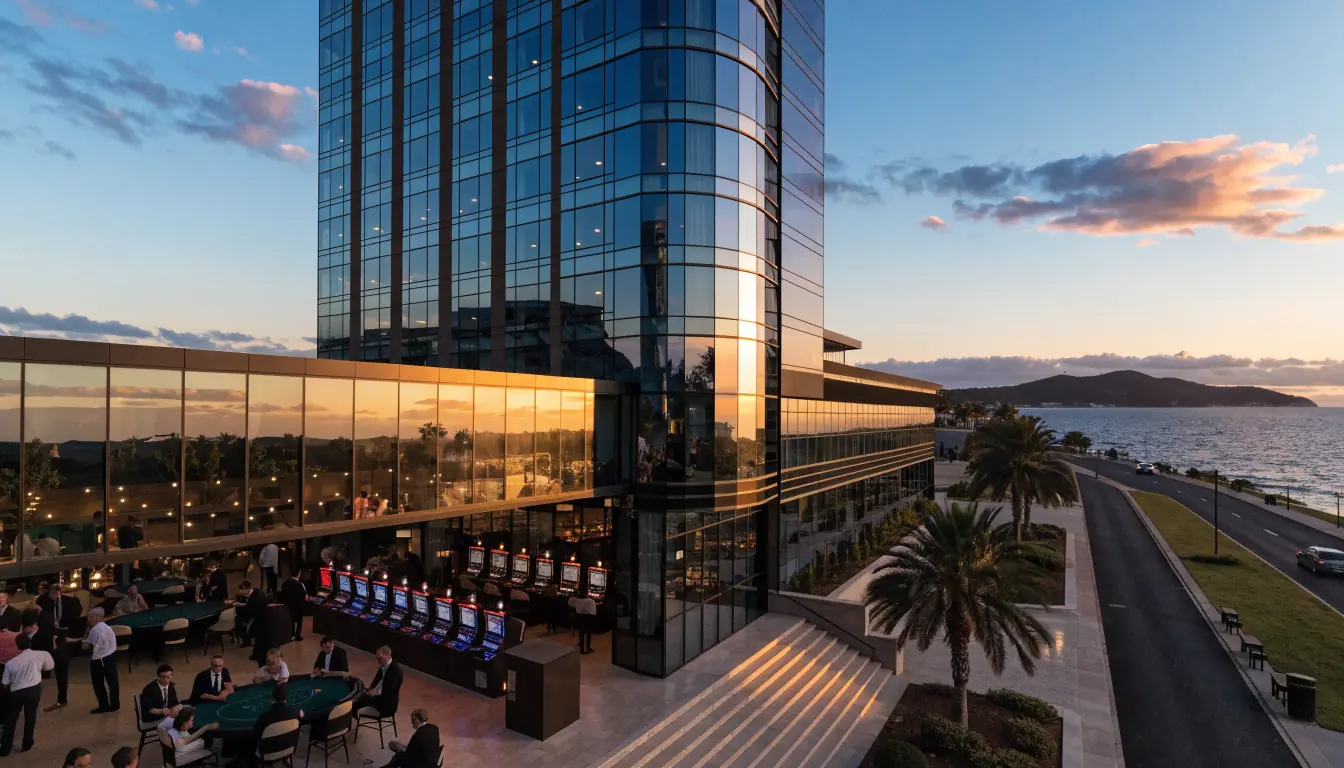
Table of Contents
- Casino Hotels in Queensland: Facilities and Gaming Access
- Casino Gaming Areas – Poker Rooms and Tables
- Dining Options: Buffets and Breakfast Services
- Parking and Accessibility at Queensland Casinos
- On‑Site Accommodation: Rooms and Suites
- Contact Details, Licensing, and Regulatory Landscape
- Operating Hours and Seasonal Openings
- Wellness and Spa Services for Casino Guests
- Restaurant Choices Within Queensland Casinos
- Food Courts and Pool Areas: Casual Gaming Spaces
Casino Hotels in Queensland: Facilities and Gaming Access
Queensland’s major casino properties are built around an integrated model: the hotel tower sits directly above or adjacent to the gaming floor, and room rates, loyalty tiers and gaming access are bundled together rather than sold as separate products. This is the distinguishing feature of a casino hotel in Queensland compared with a standard hotel booked near a gaming venue — guests move between their room and the floor without leaving the building, and hotel loyalty status often carries gaming-related perks such as priority check-in or access to designated lounges.
Room stock across these properties tends to be tiered in the conventional way — standard rooms, larger suites, and premium or club-level rooms with added services — though the exact configuration, inclusions and pricing vary by property and by season, and are set by each operator rather than published centrally. Where a casino resort operates multiple towers, room categories and views (city, river or coastal, depending on location) are usually the main variables that separate one tier from another, alongside proximity to the gaming floor and lounges.
With so many online casinos courting Queensland players, it helps to see at a glance how each operator’s licensing, bonuses and deposit terms actually stack up before you sign up.
License: Curacao OGL/2024/1335/0780 · Bonus: up to A$1,000 + 150 free spins, wager-free · Min. deposit: EUR 20 Holds a Curacao OGL license and offers a wager-free welcome package of up to A$1,000 plus 150 free spins, with a low EUR 20 minimum deposit.
License: Curacao Gaming Control Board OGL/2023/176/0095 (Hollycorn N.V.) · Bonus: up to A$1,500 + 200 free spins across 3 deposits Licensed under the Curacao Gaming Control Board via Hollycorn N.V., it spreads its welcome offer of up to A$1,500 plus 200 free spins across three deposits.
Bonus: 240% up to A$4,100 + 300 free spins Stands out for a large percentage-based bonus of 240% up to A$4,100 alongside 300 free spins.
License: Curacao Gaming Control Board · Bonus: up to A$5,000 + 400 free spins Operates under a Curacao Gaming Control Board license and backs it with a sizeable welcome bonus of up to A$5,000 plus 400 free spins.
License: Curacao · Bonus: up to A$10,000 multi-stage + 500 free spins · Min. deposit: A$20 (POLi) Curacao-licensed with a substantial multi-stage bonus reaching up to A$10,000 plus 500 free spins, and a low A$20 minimum deposit via POLi.
License: Curacao eGaming (Dama N.V.) · Bonus: up to A$10,000 + 180 free spins, 40x wagering Licensed by Curacao eGaming through Dama N.V., offering up to A$10,000 in bonuses plus 180 free spins with clearly stated 40x wagering requirements.
License: Curacao · Bonus: 100% up to A$500 + 200 free spins, 10x wagering · Payout speed: crypto 30-60 minutes, fiat 1-5 days · Min. deposit: A$10 Curacao-licensed with a 100% bonus up to A$500 plus 200 free spins at a manageable 10x wagering, fast crypto payouts within 30-60 minutes, and a low A$10 minimum deposit.
License: Curacao · Bonus: up to A$2,000 A Curacao-licensed casino offering a welcome bonus of up to A$2,000.
License: Curacao Gaming Control Board OGL/2023/176/0095 (Hollycorn N.V.) · Bonus: up to A$11,000 + 300 free spins (code NEO100) Licensed via the Curacao Gaming Control Board under Hollycorn N.V., with one of the larger bonus packages of up to A$11,000 plus 300 free spins redeemable with a bonus code.
License: Tobique Gaming Commission · Bonus: up to A$8,000 + 400 free spins across 4 deposits · Payout speed: crypto ~10-15 minutes, fiat 1-5 days · Min. deposit: A$30 Holds a Tobique Gaming Commission license and combines a bonus of up to A$8,000 plus 400 free spins across four deposits with quick crypto payouts of around 10-15 minutes and a A$30 minimum deposit.
Why the hotel–casino pairing matters in Queensland
Australia’s gambling market gives context to why this integrated hospitality format has taken hold here rather than remaining a niche offering. Australians placed bets totalling $244.3 billion in 2022–23, and 72.8% of Australian adults reported gambling in the previous 12 months as of 2022. On a per-capita basis, bets reached AUD 9,885 in FY 2020–2021, with an average loss of AUD 1,200 over the same period. A market of that scale supports venues large enough to justify full hotel towers, multiple restaurants, and dedicated gaming floors under one roof, rather than the smaller stand-alone gaming rooms found in less populated markets.
This scale also explains the structure of the hospitality offering itself. Casino hotels in Queensland are generally positioned as destination stays — guests are expected to spend a full evening or weekend on-site, using the room as a base between gaming sessions, dining bookings and shows — rather than as transit accommodation for travellers passing through. Booking packages that combine a room rate with dining credit or show tickets are common at this type of property, reflecting that expectation, though specific inclusions differ between operators and are not standardised across the state.
What sets casino hotel rooms apart from nearby accommodation
The practical distinction for anyone comparing a casino hotel room against a nearby hotel or serviced apartment comes down to access and integration rather than room size alone:
- Direct floor access — casino hotel guests typically reach the gaming floor via internal lifts or corridors, without stepping outside.
- Bundled loyalty benefits — hotel bookings made through the casino’s own loyalty programme can carry gaming-floor recognition, such as priority service in designated areas.
- On-site package deals — some casino hotels offer combined rates covering room, dining and entertainment, sold directly through the property rather than through general travel platforms.
- Tower-specific amenities — pools, gyms and lounges are often reserved for hotel guests only, separating them from day-visitors to the casino floor.
None of this extends to figures on room counts, nightly rates or specific package pricing, since operators set and revise these independently and do not publish them in a form that can be verified against a single source. Readers comparing options are better served checking current rates and inclusions directly with each property than relying on general estimates.
Gaming floor access from the hotel
Access to the gaming floor from a casino hotel in Queensland is governed by the same age and identification requirements that apply to any visitor: entry is restricted to those 18 years of age or older, regardless of hotel guest status. Hotel guests do not receive any exemption from identification checks, and staffing at floor entry points from hotel lifts mirrors that at the main public entrances. This applies uniformly across properties and is not a matter of individual hotel policy.
The combination of hotel accommodation and gaming floor under a single licence is specific to the physical, land-based casinos covered in this section. It should not be confused with online casino gaming, which operates under an entirely separate — and, for Australian residents, restricted — legal framework, covered elsewhere on this site.
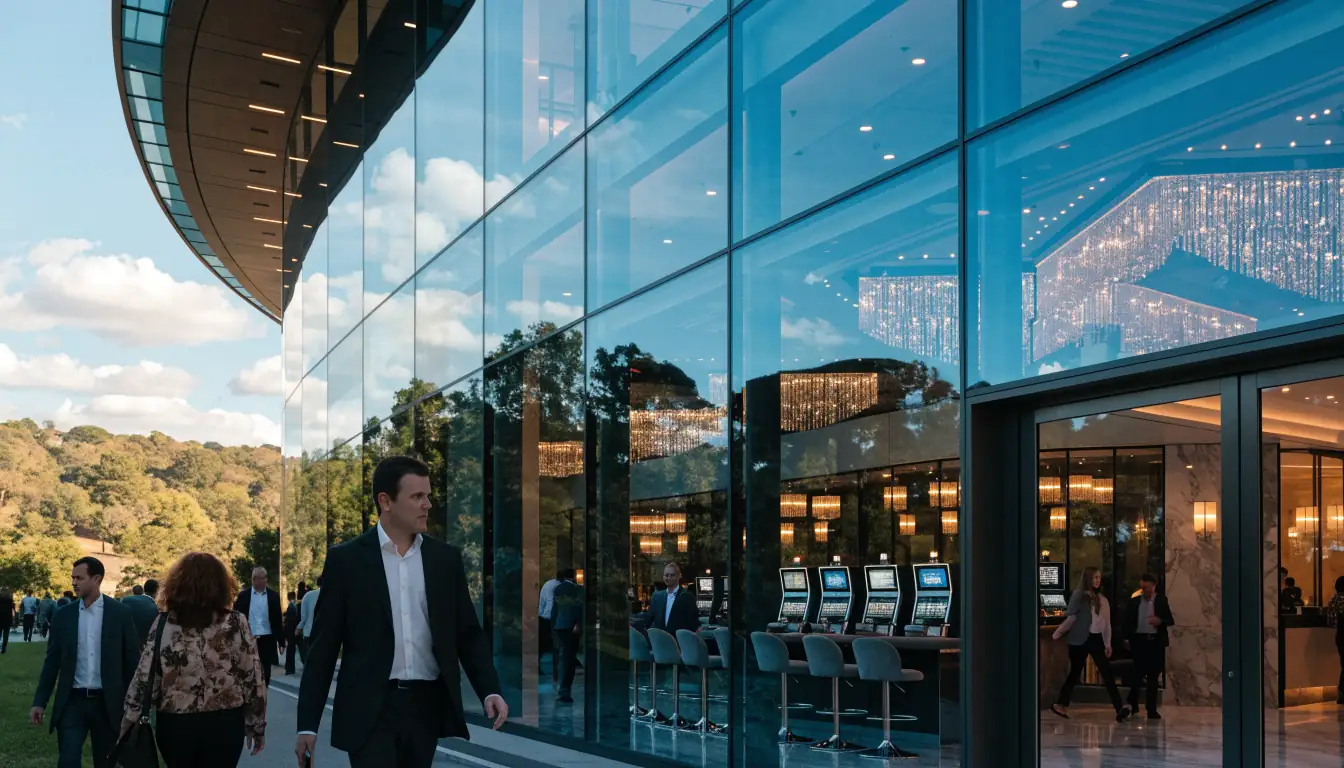
Integrated casino‑hotel models allow guests to move directly between their rooms and the gaming floor, often with loyalty perks tied to both accommodation and gambling.
Casino Gaming Areas – Poker Rooms and Tables
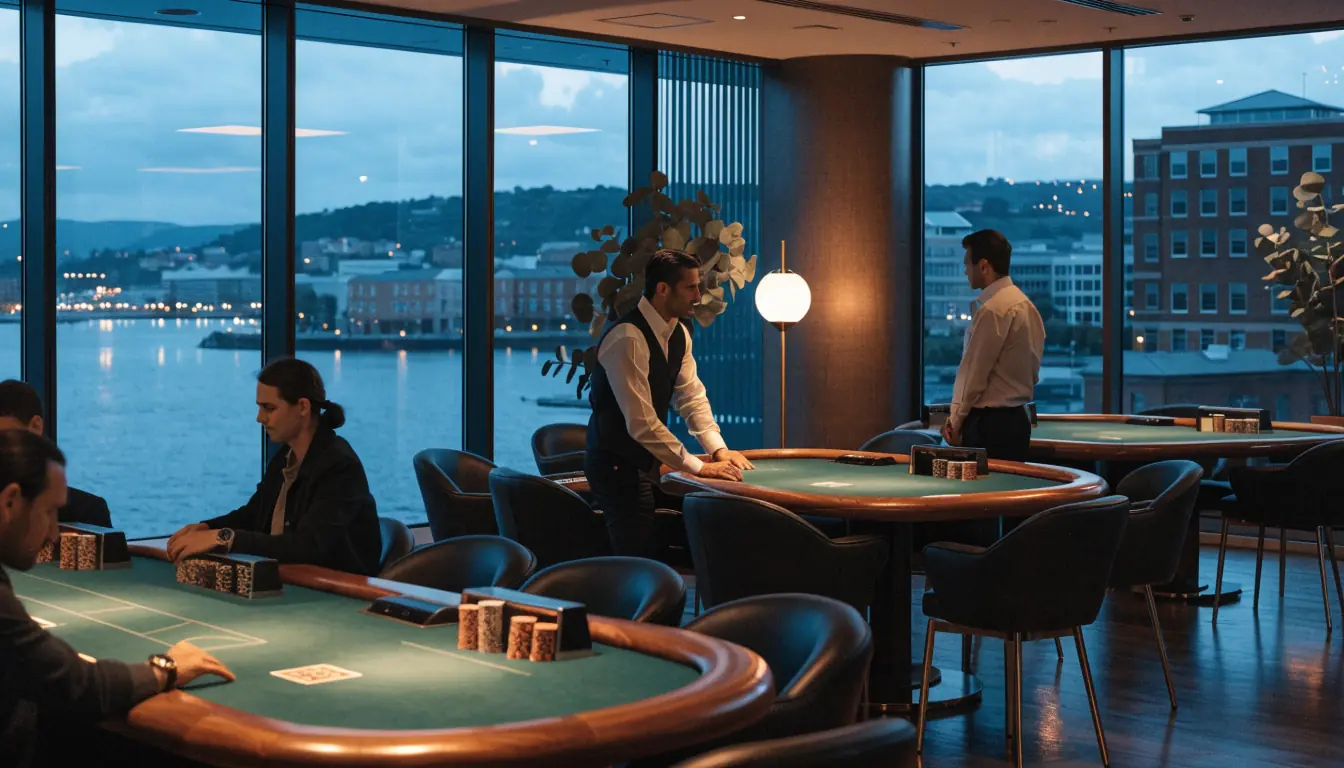
Poker at Queensland’s larger casino properties is typically organised as a distinct zone, set apart from the general gaming floor of pokies and table games. This separation matters in practice: poker rooms operate on a different rhythm, with dealers rotating between tables, waiting lists for popular stakes, and tournament clocks that structure the room around scheduled starts rather than the continuous, walk-up-and-play format found elsewhere on the floor.
Cash Games and Table Structures
Most poker rooms in the state’s larger venues run a spread of cash game tables alongside scheduled tournament events. The physical layout tends to differ from the main gaming floor in ways that matter to regular players:
- Dedicated table clusters — poker tables are grouped separately from electronic gaming machines and card tables such as blackjack or baccarat, reducing the ambient noise and foot traffic that characterise the general floor.
- Tournament staging areas — larger venues set aside sections that can be reconfigured for multi-table tournaments, with rail space for spectators and registration desks that operate only during event windows.
- Sports bar adjacency — in several properties, the poker room sits near or shares a wall with a sports bar area, allowing patrons to move between wagering on racing or sporting fixtures and cash game seats without leaving the venue’s gaming precinct.
This adjacency is a layout feature rather than a shared licensing category — sports betting and casino table games remain distinct product lines under state gaming licences, and the physical proximity simply reflects how venues have designed their floors for convenience.
Tournament Scheduling
Tournament formats vary between daily low-buy-in events aimed at casual players and periodic larger series that draw entrants from across the state. Scheduling is set by individual venues and is subject to change, so anyone planning a visit around a specific tournament should confirm current listings directly with the property rather than relying on general assumptions about frequency or format.
Who Uses These Rooms
Poker rooms draw a different demographic mix than the general gaming floor. Survey data indicates that 38% of Australian adults gambled at least once per week in 2022, a frequency pattern consistent with the regular cash game player base that keeps poker rooms operating on a nightly basis rather than only during peak weekend periods. Tournament fields, by contrast, often swell for scheduled series and thin out between them, reflecting the event-driven nature of competitive poker as distinct from the steady-state activity of the pokies floor.
Scale of Losses and the Case for Dedicated Spaces
Nationally, gambling losses reached $31.5 billion in 2022–23, a figure spread across all forms of wagering rather than poker specifically. Poker occupies a small and structurally different niche within that total: unlike pokies or the roulette wheel, poker is played against other patrons rather than the house, with the venue earning revenue through the rake or tournament fees rather than a fixed house edge on each hand. This distinction is one reason operators maintain separate rooms — the player pool, staffing requirements, and revenue model differ enough from the general floor to justify physically and operationally distinct spaces.
Problem Gambling Considerations in Poker Settings
An estimated 80,000 to 160,000 Australian adults experience significant gambling problems, representing roughly 0.5 to 1.0 percent of the adult population. Poker rooms are not exempt from this risk profile; extended tournament sessions and the social, competitive framing of the game can mask time and money spent as effectively as any other gaming product. Venues operating poker rooms are subject to the same harm-minimisation obligations that apply across the gaming floor, including signage and access to support services, regardless of whether the format is cash play or tournament structure.
Gambling Risk
Players should be aware that poker rooms, like other casino areas, can lead to significant financial loss and may trigger problem‑gambling behaviours.
Distinguishing Poker Rooms from the General Floor
The practical difference for a visitor is one of pacing and purpose. The general casino floor is designed for continuous, self-paced play across machines and table games. Poker rooms, by contrast, operate around table availability, dealer rotation, and — for tournaments — a fixed schedule that determines when a seat becomes available and when a session effectively ends. Anyone seeking a specific poker experience, whether a casual cash table or a scheduled tournament, is better served checking a venue’s current room listings than assuming uniform availability across the state’s casino properties.
Dining Options: Buffets and Breakfast Services
Buffet and breakfast services form a distinct layer of the dining infrastructure at Queensland’s casino resorts, separate from the à la carte and fine-dining rooms addressed elsewhere. These formats serve a different purpose: high-volume, fixed-format meal service aimed at guests moving between gaming floors, hotel stays, and day visits, rather than the reservation-based experience of a standalone restaurant.
The Buffet Format at Casino Resorts
A casino buffet typically operates as the resort’s central all-day dining venue, positioned to serve breakfast, lunch, and dinner sittings under a single roof. The appeal for casino operators is operational: a buffet allows a large hotel and gaming population to be fed on a rolling basis without the table-turnover constraints of a formal restaurant. For guests staying on-site, this translates into a dining option that does not require advance booking and can accommodate irregular hours, which matters in a venue where gaming activity does not follow a conventional daily rhythm.

Buffet pricing structures, seating capacity, and specific rotating menu themes are not uniformly published by Queensland casino operators, and this review does not assign figures to them where none have been independently verified. What can be said with more confidence is the functional role these venues play: they are the default dining answer for guests who want a meal without leaving the gaming precinct or committing to a separate restaurant reservation.
Breakfast Service
Breakfast service at casino resorts is generally structured around the needs of overnight hotel guests, though most venues also admit walk-in patrons. This is where the buffet format overlaps most directly with hospitality expectations familiar from any large hotel: a spread designed for turnover before mid-morning, intended to move guests efficiently toward checkout, gaming floors, or onward travel.
The distinction worth drawing here is between breakfast as a hotel amenity and breakfast as a standalone dining choice. At a casino resort, the two audiences are not always the same. A guest staying in an on-site hotel room may have breakfast bundled into their stay or offered as an add-on, while a non-resident visitor arriving for a day of gaming may access the same buffet on a pay-as-you-go basis. Neither arrangement has been confirmed in specific terms across all Queensland properties, and this section does not assert pricing or inclusion policies that have not been verified.
Buffet and breakfast services are designed for high‑volume guests, offering flexible, no‑reservation dining that complements on‑site gaming schedules.
Why Food Service Sits Alongside Gaming Revenue
Dining operations at casino resorts are not incidental to the gambling business — they are part of the same commercial structure that gives Queensland casinos their scale. Gambling revenue accounted for 7.7% of state and territory taxation revenue in 2015–16, a figure that reflects the broader fiscal weight of the casino and wagering sector in Australia. Buffet and breakfast venues, while not gaming products themselves, are built into resort complexes whose primary economic engine is the gaming floor. This is one reason food service at these properties tends toward volume and convenience rather than the slower-paced model of an independent restaurant.
It is also worth noting, separately from the operational side, that any winnings a guest takes from the gaming floor before or after a buffet meal are not subject to tax in Australia. This has no bearing on how dining is priced or structured, but it is a relevant point of context for visitors weighing the overall cost of a casino visit against any gaming outcome.
What Remains Unclear
Detailed, verified specifics on individual buffet formats — seating counts, breakfast inclusion policies tied to particular room categories, or menu rotation schedules — are not consistently published by Queensland casino operators. Where this review cannot confirm a detail against a verified source, it has been left out rather than approximated, since a guest planning a visit around meal service deserves accuracy over a plausible-sounding estimate.
Parking and Accessibility at Queensland Casinos
Parking arrangements at Queensland’s casino properties vary by location, scale of the complex, and proximity to central business districts. Visitors driving to a casino resort typically encounter a mix of multi-storey car parks, short-stay bays near entrances, and, at larger properties, valet services for guests attending gaming floors, events, or dining venues. The presence of valet parking generally correlates with the size of the hotel and convention facilities attached to the casino, since these venues cater to a higher volume of guests arriving by car during peak evening hours.
Free parking is not a universal feature across Queensland casinos. Some properties offer complimentary parking for a limited period, particularly for patrons who validate their ticket through gaming floor spend or dining receipts, while others operate on standard commercial parking rates comparable to nearby CBD car parks. Visitors intending to rely on free or discounted parking should confirm current terms directly with the venue, since policies are set independently by each operator and are subject to change without centralised disclosure.
Access Routes and Transport Considerations
Casino precincts in Queensland are generally positioned to be reachable by multiple transport modes, reflecting their role as combined entertainment and hospitality destinations rather than standalone gaming halls. Common considerations for visitors include:
- Road access — most casino complexes sit near arterial roads or highway exits, with clear signage from surrounding suburbs and, in the case of coastal properties, from major tourist corridors.
- Public transport — larger casino resorts, particularly those integrated with hotels and convention centres, tend to be within walking distance of train stations, tram lines, or bus interchanges, reducing reliance on private vehicles.
- Rideshare and taxi zones — designated pick-up and drop-off points are typically located near main entrances, separate from general parking areas, to manage vehicle flow during busy periods.
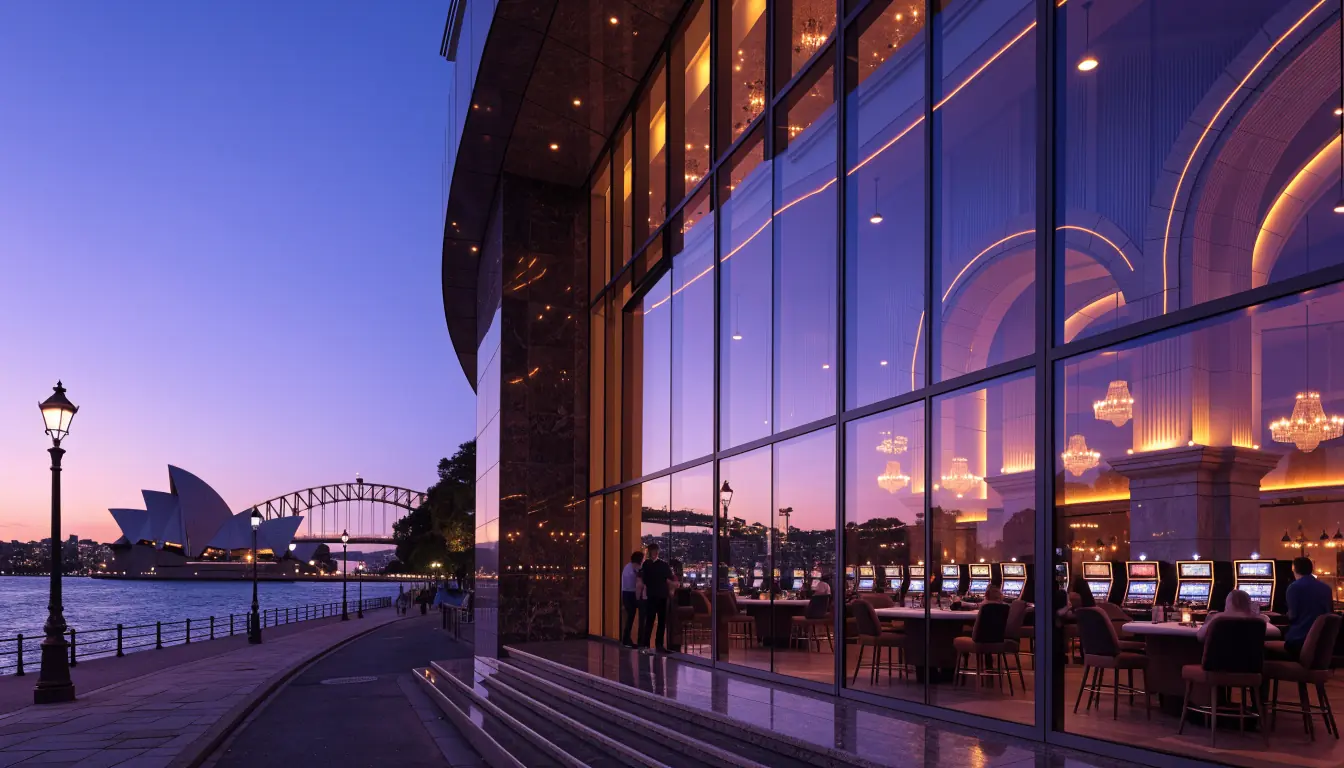
- Pedestrian access — properties located within entertainment precincts often connect directly to adjoining retail, dining, and riverside or beachfront walkways, allowing visitors to move between venues without needing to re-park.
Accessibility for Visitors with Mobility Needs
Accessible parking bays are a standard feature at Queensland casino car parks, positioned close to lifts and main entry points in line with general building accessibility requirements applied to large commercial venues. Casino floors themselves are typically laid out on a single level or connected via lifts and ramps, which supports movement for visitors using mobility aids. Specific accessibility features, however, differ between properties, and visitors with particular requirements are better served by contacting the venue directly ahead of a visit rather than assuming uniform provision across the state.
Why Transport Planning Matters
Queensland’s casinos operate within a national gambling market of considerable scale — Australians placed bets totalling $244.3 billion in 2022–23, with losses reaching $31.5 billion over the same period. Land-based venues, including Queensland’s casino resorts, form part of this broader spending pattern, and the volume of visitors moving through these properties on any given evening makes parking capacity and transport access a practical, not incidental, part of the overall experience. Peak periods — weekend evenings, major events, and school holiday periods — tend to place the greatest pressure on both car park availability and drop-off zones, a factor worth accounting for when planning a visit rather than assuming space will be readily available on arrival.
Parking Availability
Free parking is not guaranteed at all Queensland casinos; visitors should verify current terms with the venue before arrival.
Given the variation between properties, no single description of parking or access applies uniformly across every Queensland casino, and visitors are advised to check current arrangements with the specific venue before travelling.
On‑Site Accommodation: Rooms and Suites
Visitors to Queensland’s casino precincts are not limited to on‑site hotel rooms. Serviced apartments and independently operated residential‑style properties have grown up around the major gaming complexes, offering an alternative for guests who want more space, kitchen facilities, or longer stays than a standard hotel room provides. This segment of accommodation is distinct from the hotel towers integrated directly into the casino buildings, and it serves a different type of visitor: those attending for extended periods, travelling in groups, or preferring self‑catering arrangements over full hotel service.
Serviced Apartments Near Casino Precincts
Serviced apartments located within walking distance of Queensland’s casino developments typically offer one, two, or multi‑bedroom layouts with kitchenettes or full kitchens, separate living areas, and laundry facilities. These properties are usually operated by hospitality management companies independent of the casino operator itself, though many maintain informal proximity arrangements that make them a practical choice for gaming visitors. Unlike the on‑site hotel rooms discussed elsewhere, these apartments do not typically include direct internal access to the gaming floor, requiring guests to travel a short distance on foot or by vehicle.
Nearby Residential and Short‑Stay Options
Beyond formally serviced apartments, short‑stay rental accommodation in surrounding precincts has expanded alongside the growth of casino tourism in the state. These options range from compact studio units to larger multi‑room apartments suited to families or groups. Pricing and availability fluctuate with seasonal demand and major events held at nearby casino venues, though specific rate structures are set independently by each property manager rather than by the casino operator.
Considerations for Extended Stays
Guests planning stays of several nights or longer often find that apartment‑style accommodation offers practical advantages over hotel rooms, particularly where cooking facilities or additional space are a priority. This distinction matters for visitors travelling as part of larger groups, where the cost and space efficiency of a shared apartment can differ meaningfully from booking multiple hotel rooms. Because these properties operate outside the casino’s direct hospitality structure, booking, check‑in, and guest services are typically arranged through separate property management channels rather than through the casino’s own reservation systems.
Serviced apartments near casino precincts provide self‑catering options and greater space, but they lack direct internal access to the gaming floor.
Broader Context
The growth of accommodation infrastructure around Queensland’s casino precincts reflects the scale of the gambling sector’s footprint in the state’s economy more broadly. Gambling revenue accounted for 7.7% of state and territory taxation revenue in 2015–16, underscoring the sector’s long‑standing fiscal significance beyond the visitor experience itself. More recently, financial exposure to the gambling industry has extended into mainstream investment portfolios: Australia’s 20 largest superannuation funds held over A$14.8 billion in publicly listed igaming companies as of mid‑2026, indicating that the industry’s reach extends well past the physical precincts where accommodation and gaming facilities are located.
For visitors evaluating where to stay, the choice between on‑site hotel rooms and nearby serviced apartments generally comes down to trip length, group size, and whether direct internal access to the gaming floor is a priority. Neither option is inherently more affordable, as pricing depends on the specific property, season, and length of stay rather than a fixed relationship between accommodation type and cost.
Contact Details, Licensing, and Regulatory Landscape
Locating a working phone number or postal address for a Queensland casino resort is generally straightforward, since each venue publishes its own switchboard and enquiry lines for hotel bookings, table reservations and general visitor questions. What is less straightforward, and what most visitor guides skip over, is the regulatory structure sitting behind that contact desk. Queensland’s land-based casinos operate under a licensing regime distinct from the framework governing online gambling in Australia, and conflating the two leads to confusion about what is and is not permitted.
No single regulator
Australia has no single overarching statute or single overarching gambling authority. Regulation is split between state and territory bodies, which license and oversee physical venues such as Queensland’s casinos, and federal mechanisms that apply to interactive and online gambling. A Queensland casino’s operating licence, gaming floor rules and responsible-service obligations are matters for the state regulatory framework, not for any national gambling commission, because no such single national commission exists.
At the federal level, the Australian Communications and Media Authority (ACMA) enforces the Interactive Gambling Act 2001, the Commonwealth law targeting online gambling services. This is a separate track entirely from the licensing of a physical casino floor, poker room or hotel gaming area. Visitors sometimes assume that a casino’s land-based licence extends to any online platform bearing a similar name; it does not, and the two should not be treated as interchangeable when checking who actually regulates what.
Adding to the fragmentation, the Northern Territory Racing Commission (NTRC) functions as Australia’s de-facto online gambling regulator, since it licenses most national online bookmakers that benefit from lower tax rates in that jurisdiction. This is worth naming plainly because it illustrates how little the licensing of a Queensland casino resort has to do with the licensing of any online betting or gambling brand a visitor might encounter elsewhere. The two systems run in parallel, under different authorities, with different remits.
What contact enquiries typically cover
Direct contact with a Queensland casino is normally reserved for practical matters: confirming a hotel reservation, asking about table availability, arranging group visits, or resolving a billing question tied to accommodation or dining. General regulatory or licensing questions are handled by the relevant state authority rather than by the venue’s own front desk, and complaint procedures for licensing disputes typically sit outside the casino’s own customer service channel.
Licensing Overview
Queensland casino licences are issued by the state regulator, while online gambling falls under federal legislation administered by ACMA and the Northern Territory Racing Commission. The two systems operate independently.
Age verification as a baseline
Regardless of which department a visitor contacts, one condition is constant across every Queensland casino and every operator referenced in comparative reviews of the sector: the minimum age to access casino offers, gaming floors or promotional material is 18 years. This threshold applies uniformly and is not subject to venue discretion.
How this differs from review methodology
It is worth distinguishing venue licensing from the separate process used to evaluate operators for comparison purposes. Reviewers assessing casino offerings for ranking or reporting purposes deposit at least A$300 at each casino and test withdrawals directly, rather than relying on published terms alone. That practice speaks to how gaming products are evaluated for consumer information, not to how a Queensland casino resort is licensed or regulated, and the two should not be read as the same process. A casino’s contact details will not resolve questions about licensing jurisdiction, and a regulator’s public statements will not resolve a booking enquiry — the two functions remain administratively separate, a distinction that matters more than it first appears when a visitor is trying to work out who to call.
Operating Hours and Seasonal Openings
Land-based casino venues in Queensland typically operate on extended daily schedules, with gaming floors open well beyond standard retail hours and certain sections running continuously across the week. Specific opening times vary by property and by area within a venue — a poker room, a gaming lounge and a restaurant on the same premises do not necessarily share a single schedule. Individual venues publish their own hours directly, and these are the only reliable reference point, since no single regulator consolidates opening times across the state’s casinos into one public timetable.
Seasonal variation is a further complicating factor. Queensland’s tourism calendar, school holiday periods and major sporting or cultural events in the state can prompt venues to extend trading hours or add temporary programming. Conversely, some facilities scale back non-core services — a spa area or a secondary dining outlet, for instance — during quieter periods of the year. None of this is standardised across operators, and a schedule confirmed in one season should not be assumed to hold in another without checking again.
Temporary closures also occur, whether for renovation, licensing reviews, or unscheduled maintenance of gaming equipment. Because these closures are not centrally logged anywhere, the most dependable approach is to treat any listed hours as provisional until confirmed by the venue itself close to the date of a planned visit.
What this page tracks instead
This page does not list the opening hours of individual Queensland casino properties, since that information sits with each venue and changes independently of anything published here. What is tracked, and refreshed on a fixed schedule, is the standing of online-facing casino brands referenced elsewhere on the site. That ranking is recalculated weekly, using a weighted formula rather than a simple aggregate score.
| Ranking factor | Weight |
|---|---|
| Bonus generosity | 30% |
| Payout reliability | 25% |
| Game library breadth | 20% |
| Customer support responsiveness | 15% |
| User-submitted feedback | 10% |
Alongside the weighted score, each listing is separately assessed on four points: how transparently bonus terms are disclosed, how quickly cashouts are processed, the quality of customer care interactions, and the integrity of the licensing behind the operator. These are updated on the same weekly cycle as the ranking itself, so a listing’s position can shift from one week to the next as new data comes in.
It is worth restating plainly what this ranking is not: it has no bearing on real-money online casino gambling being offered to Australian residents, since no such offering is lawful under the Interactive Gambling Act 2001. The weekly cycle described here concerns how offshore-licensed brands are compared against one another for informational purposes, not an endorsement of accessing them from Australia. Readers looking for the operating calendar of a physical Queensland casino are better served by that venue’s own published notices, which reflect local conditions no general ranking process can capture.
Wellness and Spa Services for Casino Guests
Queensland’s land-based casino resorts typically position wellness facilities as a complement to their gaming floors, offering a separate register of amenities for guests who want a break from tables and pokies without leaving the property. Spa and relaxation services fall entirely outside the framework of online gambling regulation — the Interactive Gambling Act 2001 governs interactive betting and casino-style games delivered over the internet, and has no bearing on the physical, in-person services a resort chooses to offer on-site. Any comparison between the two is therefore a matter of amenity, not of licensing status.
What wellness areas generally include
Physical wellness offerings at large casino resorts tend to be organised around a few recurring categories:
- Treatment rooms — private spaces for massage, facials and body treatments, usually bookable in advance rather than available on a walk-in basis.
- Relaxation lounges — quiet areas adjacent to treatment rooms, separate from the noise of the gaming floor.
- Fitness and pool access — where wellness facilities are bundled with hotel amenities rather than run as a standalone spa brand.
Specific service menus, session lengths, and pricing structures vary by property and are not published in any consistent, verifiable format across Queensland’s casino resorts, so no comparison of individual spa packages is offered here.
Why this sits apart from other resort offerings
Wellness services are commercially and operationally distinct from the accommodation, dining and gaming functions described elsewhere in this guide. A day spa or treatment suite does not require a gaming licence, is not subject to the same regulatory scrutiny as a poker room or gaming floor, and is typically booked and staffed independently of the casino operation itself. This separation matters for anyone assuming that a resort’s gambling licence says anything about the quality, safety or regulation of its spa services — it does not. Licensing frameworks covering casino gaming in Queensland have no jurisdiction over massage therapy, beauty treatments or wellness programming, which instead fall under general health and safety and, where relevant, cosmetic therapist licensing at the state level.
A practical distinction for visitors
For visitors planning a stay around a Queensland casino resort, wellness facilities should be treated as a hotel-style amenity rather than an extension of the gaming offer. There is no indication that access to spa services is linked to gaming activity, membership tiers, or loyalty programs in any standardised way across properties, and no such link should be assumed without direct confirmation from the resort in question. Anyone seeking specifics — treatment availability, opening windows, or booking requirements — is better served contacting the resort directly than relying on general assumptions carried over from the casino’s gaming reputation, since the two operate under entirely separate internal structures.
Restaurant Choices Within Queensland Casinos
Queensland’s casino complexes typically operate a tier of restaurants that sit apart from the buffet halls and food-court outlets covered elsewhere on this page. This layer covers fine-dining rooms, steakhouses, Asian-inspired kitchens and mid-range casual eateries, each positioned as a distinct dining destination rather than a quick meal between gaming sessions.
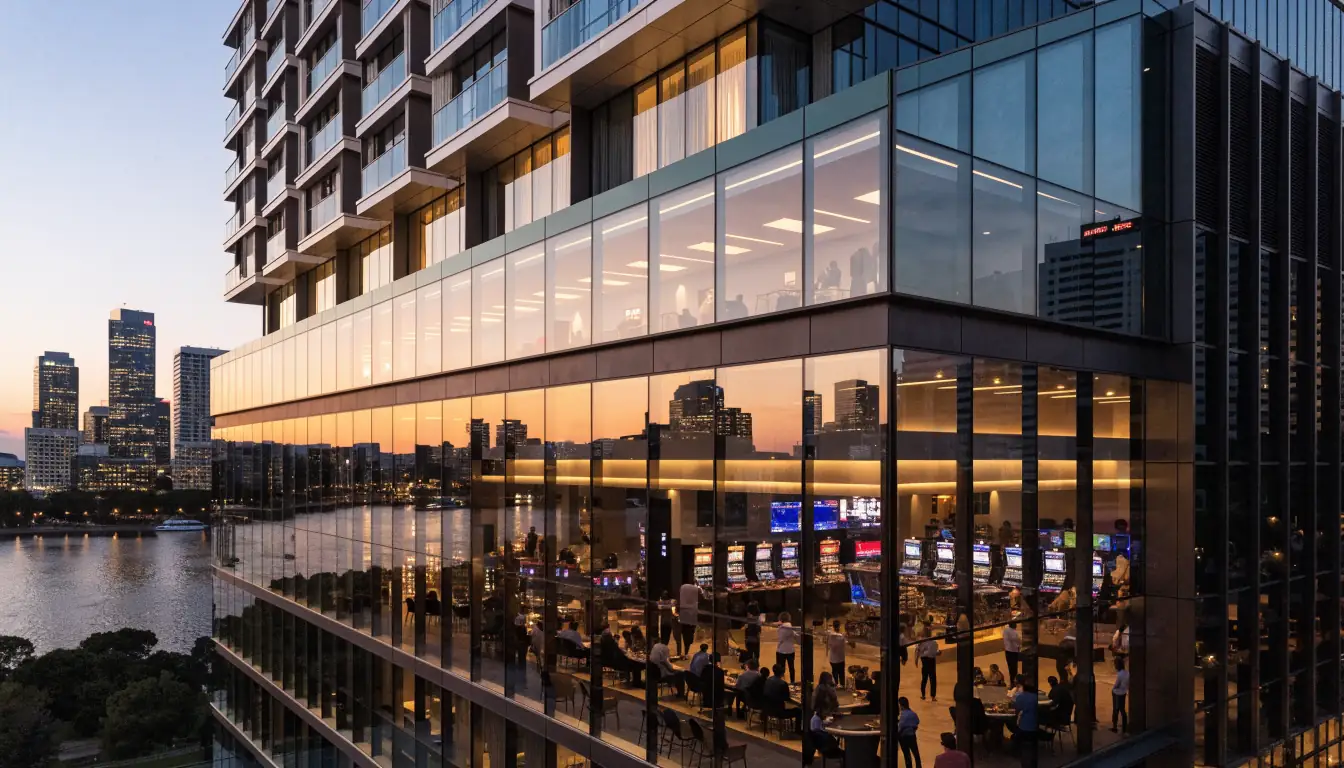
Fine-dining venues generally anchor the upper end of a casino’s food offering. These rooms tend to emphasise seafood and premium cuts of meat, wine lists curated to match a tasting menu, and table service designed for longer, occasion-driven visits. Bookings at this level are usually recommended well ahead of weekend evenings, when demand from both gaming guests and outside diners tends to peak.
A second tier of restaurants covers specific cuisines — Cantonese, Japanese, Italian and modern Australian formats appear across most Queensland properties in some combination. These venues occupy a middle ground: table service and a fixed menu, but without the formality or price point of the flagship fine-dining room. They function as a practical option for guests who want a sit-down meal without committing to a multi-course experience.
Casual bar-and-grill style restaurants make up the third tier. These rooms typically stay open later than the fine-dining venues and serve a simplified menu suited to guests moving between gaming floors, entertainment areas or a rooftop bar. Where a rooftop bar is attached to the casino complex, it usually operates its own light food menu alongside drinks, distinct from the sit-down restaurants below it.
What to check before booking
Restaurant hours, menu pricing and cuisine availability vary between properties and change over time, so figures are not listed here. Guests planning a visit around a specific restaurant should confirm current details directly with the venue rather than relying on general descriptions.
How this section relates to casino rankings
The restaurant tier at a physical casino is a separate matter from how online casino operators are ranked on this site. Those rankings are recalculated weekly using a weighted formula: bonus generosity accounts for 30%, payout reliability 25%, game library breadth 20%, customer support responsiveness 15%, and user-submitted feedback 10%. Each listed operator is scored on bonus transparency, cashout speed, customer care and licensing integrity. None of this scoring applies to the hospitality venues described above — the two systems assess entirely different products and are not interchangeable measures of quality.

Diners comparing Queensland casino restaurants are therefore working from venue reputation, cuisine type and service tier, not from any ranking formula. The distinction matters because the same complex may house a highly rated restaurant sitting alongside gaming operations that are assessed under entirely separate criteria.
Food Courts and Pool Areas: Casual Gaming Spaces
Queensland’s casino resorts pair their gaming floors with informal eating and lounging options built for speed rather than occasion. Food-court style outlets typically sit apart from the fine-dining and casual restaurant precincts, offering counter service, shorter waits and lower price points aimed at guests moving between gaming sessions rather than settling in for a full meal.
These outlets usually cluster near main thoroughfares or transit points within the resort, making them a practical stop before or after time on the floor rather than a dining destination in themselves. The format favours grab-and-go items over table service, distinguishing it clearly from the sit-down restaurants covered elsewhere in a casino complex.
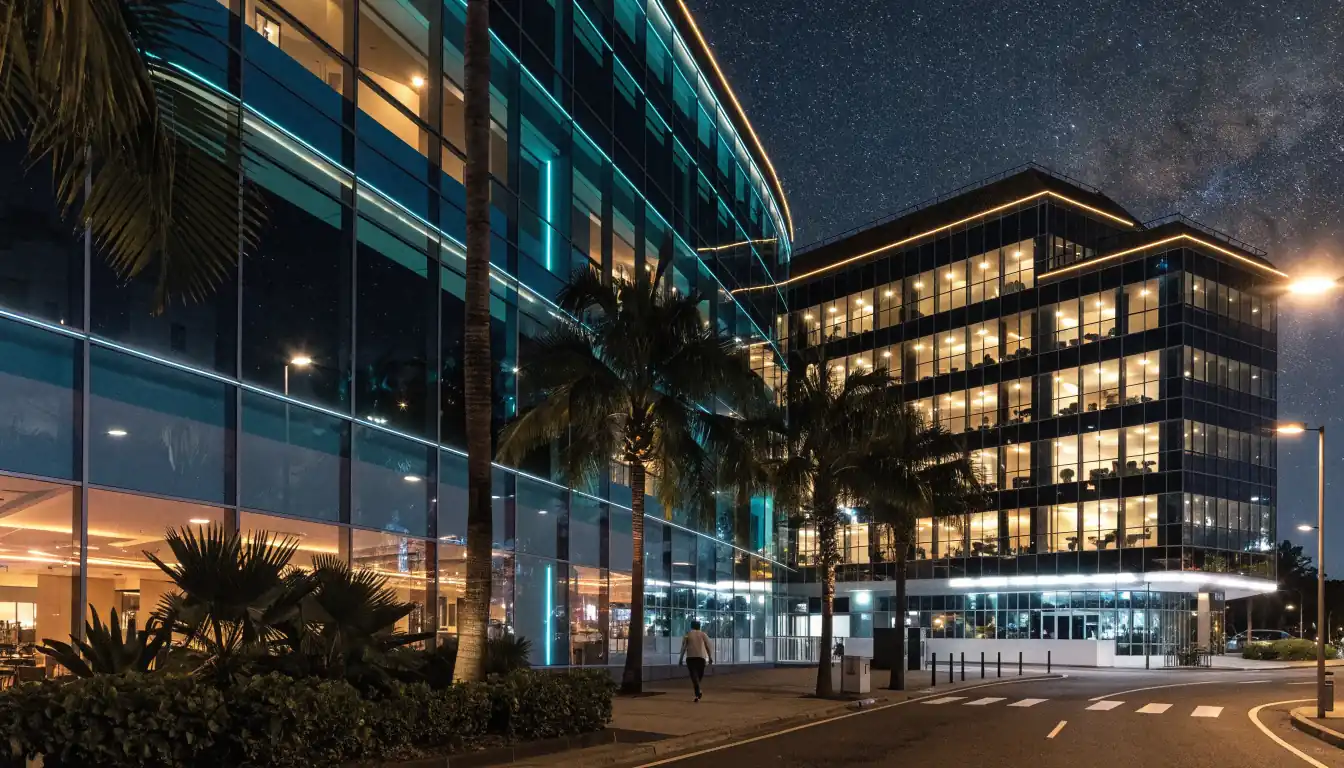
Poolside areas serve a similar function for guests seeking a break outdoors. These spaces generally combine casual food and drink service with loungers and shade, positioned for resort guests rather than day visitors. Menus at poolside outlets tend to mirror the food-court approach — light, quick items rather than the layered offerings found in a casino’s dedicated restaurants.
Neither the food court nor the pool bar extends to gaming activity itself; wagering remains confined to licensed floor areas and gaming rooms addressed in other sections of this guide. Public reporting does not detail operating specifics — hours, seating capacity or seasonal menu changes — for individual food-court and poolside outlets across Queensland’s casino properties, so prospective visitors are better served checking directly with the resort in question before planning a visit around these facilities.
What should a valid complaint include?
Each casino listing is evaluated on factors like bonus transparency, cashout speed, customer care, and licensing integrity, which serve as the core criteria for assessing the validity of an issue against an operator.
What law governs online gambling in Australia?
The Interactive Gambling Act 2001 (IGA) is the primary Commonwealth law, enforced by the Australian Communications and Media Authority (ACMA), which prohibits offering online casino games to residents.
What does RTP mean in pokies?
Game library breadth accounts for 20% of the ranking formula, evaluating the variety of pokies and other games available, though the text does not define the specific term RTP.
Can I play online pokies for free?
Online casino style games, including slots, are prohibited under the Interactive Gambling Act 2001, though the legislation targets operators, meaning individual Australians are not illegally playing at offshore-licensed venues.
Is online gambling legal in Australia?
Online sports betting is legal under state or territory licences, but online casino games, poker, and in-play betting are federally prohibited under the Interactive Gambling Act 2001.
Are crypto casinos legal in Australia in 2026?
It is illegal to offer online casino gambling domestically and no licences are available, though Australians are not legally targeted for playing at offshore-licensed online casinos.