
Best Pokies in Melbourne: Regulation, Types and RTP
 Available in US
Regulatory environment and licensing for Crown Melbourne online pokies
No online casino, including any operation carrying the Crown Melbourne name, holds a Australian licence to offer pokies over the internet to residents of this country. Crown’s licensed activity in Victoria concerns its physical premises; it does not extend to a domestically regulated online pokies product. Searches that pair "Crown Melbourne" with "online pokies" are, in practical terms, describing a category of gambling that Australian law does not authorise anyone to run from within Australia.
The relevant statute is the Interactive Gambling Act 2001 (IGA), the cornerstone of Commonwealth gambling regulation. The IGA prohibits operators from offering prohibited interactive gambling services — a category that includes online casino games such as pokies, poker, and blackjack — to people who are physically located in Australia at the time of play. The Act is administered by the Australian Communications and Media Authority (ACMA), which investigates non-compliant services and can act against operators found to be targeting Australian users.
It is worth being precise about what the law targets. The IGA is directed at operators, not at individual players, and it does not create a domestic licensing pathway for real-money online casino games. This means there is no register of Crown-branded or any other locally licensed online pokies sites to check, because none exists. Any site presenting itself as a licensed Australian online pokies venue — under the Crown name or otherwise — is making a claim the regulatory framework does not support.
Since online pokies have become a real alternative to venues around Melbourne, it helps to know which platforms back up their game libraries with solid licensing and clear terms before you sign up.
License: Curacao OGL/2024/1335/0780 · Bonus: up to A$1,000 + 150 free spins, wager-free · Min. deposit: EUR 20 Licensed under Curacao OGL and notable for a wager-free welcome offer of up to A$1,000 plus 150 free spins, with a modest minimum deposit requirement.
License: Curacao Gaming Control Board OGL/2023/176/0095 (Hollycorn N.V.) · Bonus: up to A$1,500 + 200 free spins across 3 deposits Operating under a Curacao Gaming Control Board licence via Hollycorn N.V., it spreads its welcome bonus of up to A$1,500 and 200 free spins across three deposits, giving newcomers a staged start.
Bonus: 240% up to A$4,100 + 300 free spins Stands out for a large percentage-based welcome match of 240% up to A$4,100 alongside 300 free spins.
License: Curacao Gaming Control Board · Bonus: up to A$5,000 + 400 free spins Licensed by the Curacao Gaming Control Board and offering a sizeable welcome package of up to A$5,000 plus 400 free spins.
License: Curacao · Bonus: up to A$10,000 multi-stage + 500 free spins · Min. deposit: A$20 (POLi) Curacao-licensed with a multi-stage bonus reaching up to A$10,000 and 500 free spins, plus an accessible entry point via a low minimum deposit using POLi.
License: Curacao eGaming (Dama N.V.) · Bonus: up to A$10,000 + 180 free spins, 40x wagering Licensed under Curacao eGaming through Dama N.V., offering a bonus of up to A$10,000 with 180 free spins, subject to 40x wagering conditions.
License: Curacao · Bonus: 100% up to A$500 + 200 free spins, 10x wagering · Payout speed: crypto 30-60 minutes, fiat 1-5 days · Min. deposit: A$10 Curacao-licensed with a 100% match up to A$500 and 200 free spins at a low 10x wagering requirement, plus fast crypto payouts and a low minimum deposit for easy entry.
License: Curacao · Bonus: up to A$2,000 Holds a Curacao licence and offers a welcome bonus of up to A$2,000, a straightforward option for those wanting a simple starting offer.
License: Curacao Gaming Control Board OGL/2023/176/0095 (Hollycorn N.V.) · Bonus: up to A$11,000 + 300 free spins (code NEO100) Licensed by the Curacao Gaming Control Board through Hollycorn N.V., featuring one of the larger bonus offers here at up to A$11,000 plus 300 free spins, unlocked with a bonus code.
License: Tobique Gaming Commission · Bonus: up to A$8,000 + 400 free spins across 4 deposits · Payout speed: crypto ~10-15 minutes, fiat 1-5 days · Min. deposit: A$30 Licensed by the Tobique Gaming Commission, this operator spreads a bonus of up to A$8,000 and 400 free spins across four deposits, backed by quick crypto payout times.
Sites that accept Australian players for pokies typically operate under offshore licensing regimes, most commonly Curaçao or Anjouan, and fall outside the ACMA’s licensing structure entirely. This has practical downstream consequences for anyone searching for Crown Melbourne pokies with real money in mind:
- Payment friction. Australian banks generally decline credit card deposits directed at offshore casino operators, which is one reason operators serving this market lean on alternative rails.
- Alternative payment rails. Some offshore-licensed operators accept PayID, Neosurf vouchers, and cryptocurrencies such as Bitcoin or Ethereum for deposits and withdrawals, working around the restrictions that apply to card-based transactions.
- No local dispute mechanism. Because there is no Australian licence attached to these products, complaints about a stalled withdrawal or a disputed bonus term have no ACMA-run resolution process to fall back on; whatever recourse exists is defined by the offshore licensor’s own framework.
None of this makes it illegal for an individual to play at an offshore site — the IGA’s prohibition falls on the operator, not the player. But it does mean that terms like "high limit pokies" or "maximum cash payout" advertised under a Crown Melbourne banner online should be read as marketing language from an offshore-licensed operator rather than as a feature of any Victorian gaming licence.
Age and self-exclusion
Access to any online pokies content, regardless of where it is licensed, is restricted to those aged 18 and over. Operators serving Australian players are expected to keep this line firm and to avoid presenting gambling content, including any references to no-deposit offers, in ways that could reach minors.
Self-exclusion tools sit outside the scope of any single operator’s licence. Support services such as Gambling Help Online and BetStop operate independently of individual casino brands, including Crown, and are not tied to whether a given pokies product is offshore-licensed or not. Players concerned about their own pokies activity are better served by these independent services than by relying on self-exclusion features built into an individual offshore site, since the latter carries no ACMA oversight to confirm it functions as advertised.
Comprehensive guide to Melbourne pokies: game types, features and player experience
Melbourne’s relationship with pokies extends well beyond the gaming floor at Crown Casino. Searches for pokies near Melbourne Airport, in North Melbourne, South Melbourne, Port Melbourne, East Melbourne, and the western suburbs reflect a simple reality: venues with electronic gaming machines are distributed across the metropolitan area, in hotels and licensed clubs as much as in the flagship casino complex on the Yarra. What ties these locations together, and what increasingly matters more than physical proximity, is that Australian players now access an equivalent — and in many respects broader — range of pokies through licensed online platforms. This section sets out how those games work, what separates one title from another, and what player experience actually consists of once regulatory questions are set aside.
Simple machines with a small fixed number of paylines, low volatility and fast play.
Five‑reel titles with dozens of fixed paylines, often featuring wilds, scatters and free‑spin bonuses.
Variable‑reel‑height format offering thousands of ways to win, typically higher volatility.
Wins are formed by adjacent matching symbols in clusters, usually with cascading reels.
What a pokie is, mechanically
Aussie pokies are reel-based casino games built around simple play but huge variety. At their core, every pokie machine or online pokie title runs on the same basic principle: a set of reels, populated with symbols, spins and stops in a pattern determined by a random number generator (RNG). Reputable online casinos use RNG-based games and audited providers, meaning the outcome of each spin is generated independently of previous results and cannot be predicted or influenced by the player. This is a meaningful distinction from the mechanical or pseudo-mechanical machines of earlier decades, where physical reel weighting played a role. Modern pokies, whether encountered in a Melbourne venue or through an online lobby, are software products first and cabinet or browser display second.
The "huge variety" side of that definition is where most of the player-facing differences emerge. Two games can share an identical RNG architecture and still feel completely different because of reel count, payline structure, symbol design, bonus mechanics, and the studio’s choice of volatility and hit frequency. Understanding those variables is more useful to a player than any marketing description of a game as "classic," "video," or "premium."

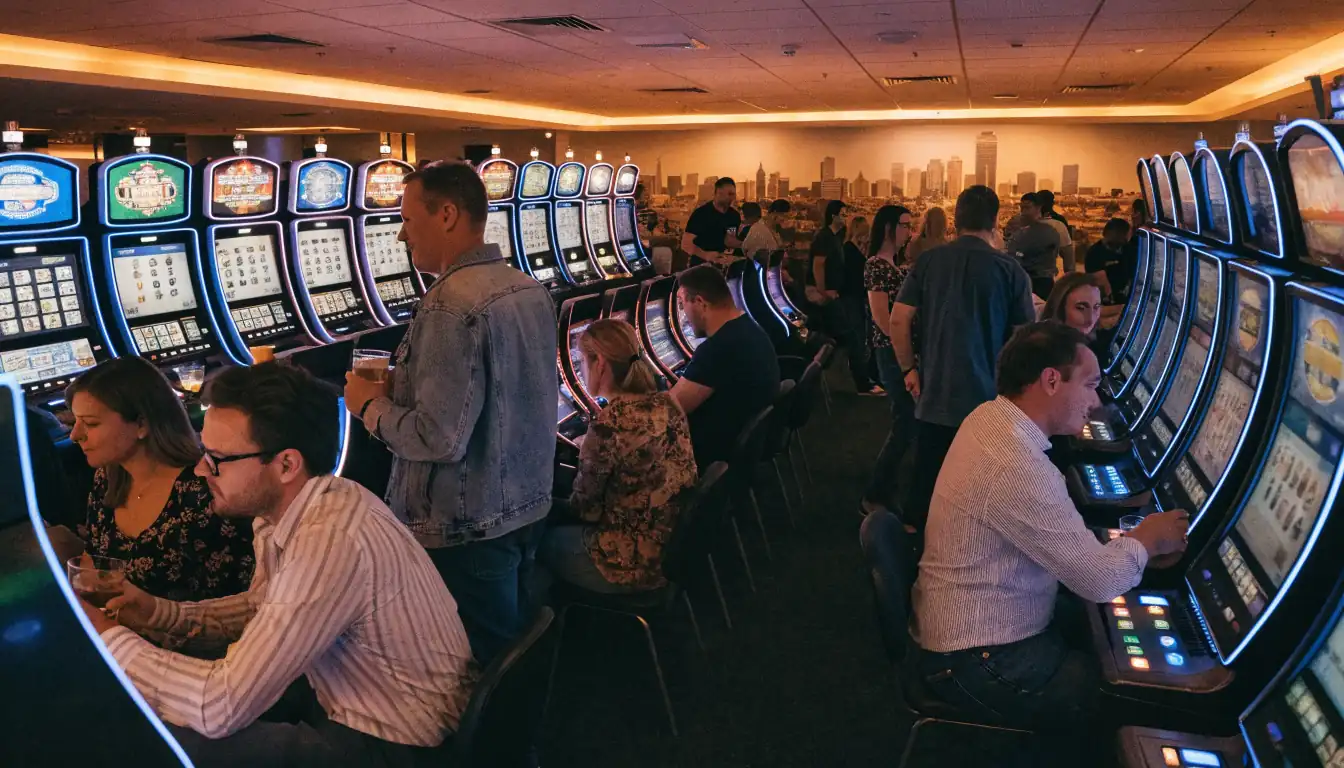
Reel and payline structures
Pokies broadly fall into a few structural categories, and Melbourne-area players — whether at a physical venue or via an online account — will encounter most of them:
- Classic three-reel pokies — simple, low-complexity games with a small number of paylines, often modelled on traditional fruit-machine formats. These tend to have straightforward paytables and fewer bonus features, appealing to players who want fast, uncomplicated rounds.
- Video pokies with fixed paylines — five-reel formats with a set number of paylines (commonly in the dozens), incorporating wild symbols, scatter-triggered free spins, and multi-level bonus rounds.
- Megaways-style mechanics — a variable-reel-height format where the number of ways to win changes on every spin, producing paylines that can run into the thousands rather than a fixed count. This mechanic has become one of the more recognisable structural innovations in the pokies category over the past several years, and titles using it are widely represented in online libraries available to Australian players.
- Cluster-pay formats — instead of paying along lines, wins are formed by clusters of matching symbols adjacent to one another, often paired with tumbling or cascading reels that remove winning symbols and drop in new ones. All Star Clusters is an example of this format, built around grouped symbol wins rather than traditional paylines.
None of these structures is inherently superior. A three-reel classic and a Megaways title can both be well designed or poorly designed; what changes is the rhythm of play, the size of typical wins relative to bet size, and how much the bonus round contributes to overall return.
Volatility and hit frequency
Volatility (sometimes called variance) describes how a pokie distributes its wins over time, and it is one of the more practically useful concepts for a player choosing between titles. Lower volatility usually means smaller wins more often, while higher volatility means less frequent but potentially larger wins. A low-volatility game is likely to keep a balance ticking over with frequent modest returns, which suits players who prioritise session length over the chance of a large hit. A high-volatility game can produce long stretches without a meaningful win, punctuated by larger payouts, usually tied to bonus rounds or multiplier features.
Typical hit frequency for low‑volatility games ranges around 30‑35%, while high‑volatility titles often fall below 20%.
Hit frequency is a related but distinct measure — it describes how often a spin returns any win at all, regardless of size. Balanced pokies have a hit frequency between 25% and 35%, meaning that roughly one in three to one in four spins returns some payout, even if many of those payouts are smaller than the stake. Games with a hit frequency outside that band tend to sit at the extremes of volatility: very high hit frequency usually accompanies low volatility and small average wins, while very low hit frequency is typical of high-volatility games built around rare, large payouts.
Neither volatility nor hit frequency is disclosed as prominently as RTP, but many providers list both in game information panels, and this information is worth checking before committing a session bankroll to an unfamiliar title.
Software providers and what they signal
Australian-friendly casinos vary widely in the software they offer, and the provider behind a given pokie is a reasonably reliable signal of what to expect in terms of design quality, mathematical structure, and regulatory oversight. Game studios Pragmatic Play, NoLimit City, Hacksaw Gaming and Betsoft are audited by iTech Labs and eCOGRA, two of the independent testing bodies that certify RNG fairness and verify that a game’s advertised RTP matches its actual mathematical model. This audit trail matters more than brand recognition: a title from an unaudited or obscure studio carries no such verification, regardless of how it is marketed.
RNG
Random Number Generator – the algorithm that determines the outcome of each spin independently, ensuring fairness and unpredictability.
Beyond the four studios named above, the broader pokies category includes providers such as Big Time Gaming — credited with popularising the Megaways mechanic — and NetEnt, whose back catalogue includes long-running titles still found in many online lobbies. Each studio tends to have a recognisable design signature:
- Pragmatic Play favours high-volatility, feature-dense titles with frequent bonus buy-adjacent mechanics (subject to jurisdictional restrictions) and a broad range of themes.
- NoLimit City is known for unconventional, often darker thematic content and some of the higher volatility ratings in the market.
- Hacksaw Gaming has built a reputation for irreverent presentation paired with mathematically aggressive volatility.
- Betsoft leans toward cinematic presentation and 3D-style animation, generally with a more moderate volatility profile.
- Big Time Gaming is closely associated with the Megaways engine itself.
- NetEnt produced several titles, including Blood Suckers, that remain reference points for classic video pokie design with modest volatility.
Because Australian-friendly casinos vary widely in the software they offer, no single platform carries the full catalogue of every studio. Checking the provider list before signing up is a more useful exercise than judging a site purely by its homepage presentation.
Named titles and their measurable characteristics
Melbourne-based players researching specific pokies encounter a handful of titles across studios and lobbies. Where verifiable characteristics exist, they are listed below; where a game is known primarily by name and format rather than by a published statistic, it is presented without invented figures.
- Blood Suckers — a NetEnt title, one of the studio’s longer-standing releases, built as a five-reel video pokie with a lower-volatility profile typical of NetEnt’s earlier catalogue design philosophy.
- Book of 99 — a video pokie built on the “Book of” template popularised across the industry, using a expanding-symbol bonus mechanic common to that sub-genre.
- All Star Clusters — a cluster-pay pokie, distinguished from paylines-based games by its grouped-symbol win structure.
- Merge Up — a pokie title built around merging or combining symbol mechanics rather than traditional line wins.
- Snoop Dogg Dollars — a licensed-brand pokie title, part of the broader trend of pokies built around recognisable entertainment personalities and franchises.
This is not an exhaustive top-list; it reflects the titles for which verifiable, named details exist rather than a subjective ranking of "best" pokies. Where a provider publishes RTP, volatility, or hit-frequency data for a specific title, that data should be checked directly in the game’s information panel before play, since studios periodically release multiple RTP configurations of the same title for different markets.
Bonus structures: what to read past the headline
Many Australian-friendly casinos offer free spins and pokie bonuses as part of welcome offers or ongoing promotions. These typically take one of a few forms: deposit-matched bonus funds, a fixed number of free spins on a nominated pokie, or a combination of both. The headline figure attached to a promotion — the size of a match bonus or the number of spins — is the least informative part of the offer on its own.
Wagering, max bet rules, and max cashout limits can affect the real value of a bonus offer more than the headline number. A wagering requirement determines how many times bonus funds (or funds won from free spins) must be played through before they become withdrawable; a maximum bet rule caps the stake size permitted while a bonus is active, and breaching it can void winnings entirely; a maximum cashout limit caps how much of a bonus-derived win can actually be withdrawn, regardless of the balance shown in the account. Reading these three terms before opting into a promotion is a more reliable indicator of value than comparing headline bonus sizes across sites.
Bonus‑Buy Not Allowed
Bonus‑buy features are prohibited for Australian players and must not be marketed or offered on Australian‑facing sites.
Bonus-buy features — mechanics that allow a player to pay a set amount to trigger a bonus round immediately rather than spinning for it — exist in parts of the wider industry, but they are not compatible with the advertising and product standards that apply to services offered in Australia, and reputable sites serving Australian players do not present this mechanic as a purchasable option. Where a Feature Buy option is technically embedded in a game’s global build, it is not something that should be marketed or made available to players accessing the site from Australia.
Starting a session: a practical sequence
Starting with the minimum bet, volatility, and any extra feature cost is a sequence worth following before committing meaningful funds to an unfamiliar pokie. In practice this means:
- Checking the minimum and maximum bet range for the title, since these vary considerably between games and affect how long a given bankroll will last.
- Reviewing the stated volatility (low, medium, high) in the game information panel, and treating unlabelled titles with caution rather than assuming a moderate profile.
- Confirming whether any in-game feature carries an additional cost, and whether that feature is actually accessible under the terms applicable to the account’s jurisdiction.
- Only then committing to a session length and bankroll, informed by whether the game’s volatility profile matches the intended style of play — shorter high-variance sessions versus longer low-variance ones.
This sequence does not guarantee outcomes — RTP remains a long-run theoretical figure rather than a short-session prediction — but it reduces the chance of misreading a game’s basic mechanics before staking money.
Support services and operational reliability
Player experience is shaped as much by what happens around the game as by the game itself. Withdrawal speed has been identified by at least one industry source as the single most important factor for Australian online casino players going into 2026, and the same source reports that some high-performing Australian casinos process more than 90% of payments in under 15 minutes. These figures come from a single reporting source and describe a fast-moving segment of the market rather than an industry-wide standard; players should treat stated withdrawal times as claims to verify against a casino’s own terms rather than as a guaranteed benchmark.
Similarly, one industry report describes top Australian casinos as providing 24/7 live chat with response times under two minutes. Again, this reflects the upper end of the market as observed by a single source rather than a universal minimum, and actual response times vary between operators. Players comparing sites should check published support hours and channels directly rather than assuming a fixed standard applies across the board.

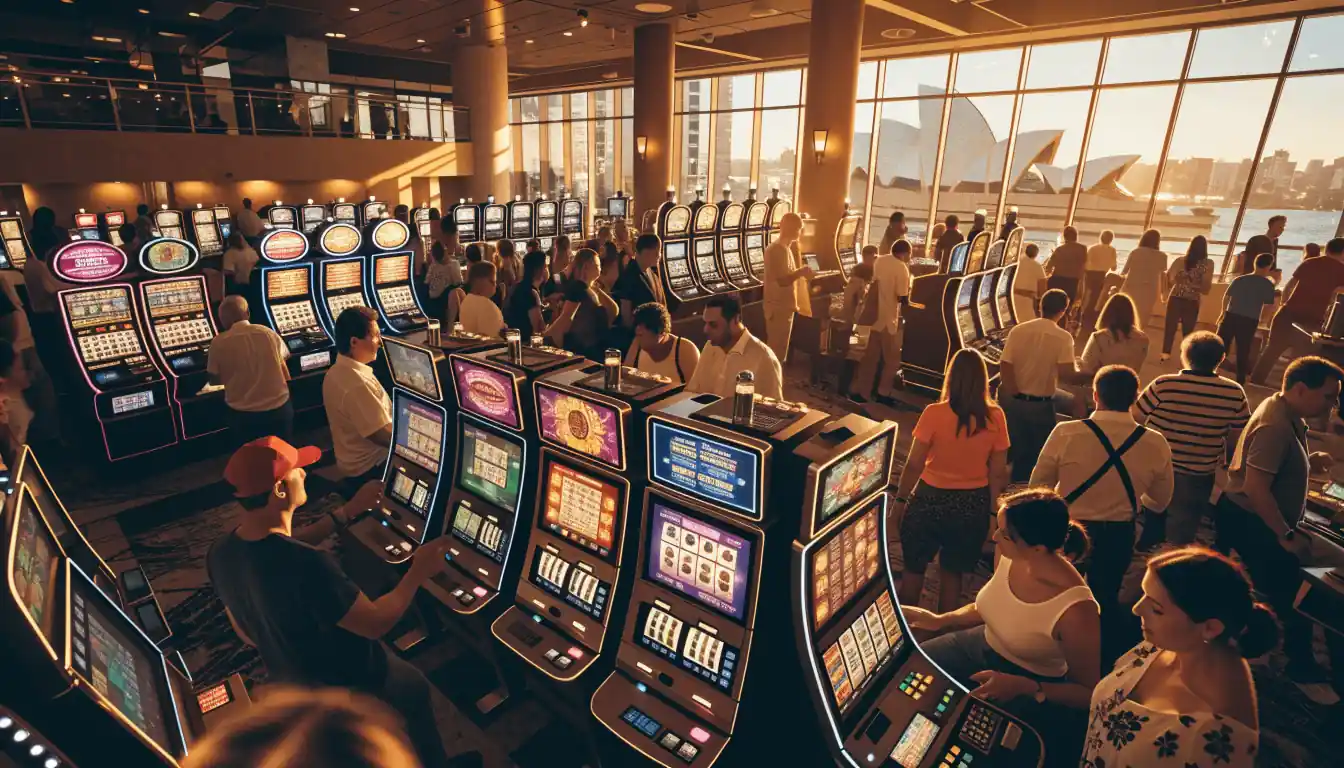
Casinos with international licenses provide their own dispute resolution frameworks, which typically sit outside any Australian regulatory body — a point that matters for support quality because it means recourse in a dispute depends entirely on the operator’s own complaints process and the licensing authority’s oversight, rather than on a local ombudsman. The sites available to Australian players in this category generally operate under Curaçao eGaming licenses issued via Antillephone N.V., and it is worth confirming that a chosen platform’s dispute process, and not just its game library, has been reviewed before relying on it for significant withdrawals.
Players attempting to access sites that are not compliant with Australian-facing regulatory requirements may experience IP blocking, according to at least one industry report — a technical measure some jurisdictions or infrastructure providers apply rather than a formal legal consequence for the player. This is a separate matter from the question of whether playing at an offshore-licensed casino is itself lawful; there are no federal or state laws in Australia that penalise citizens for playing at offshore online casinos, though access reliability is a distinct, practical consideration from legality.
- Verify that the casino holds a recognised offshore licence.
- Check the provider’s audit certificates (iTech Labs, eCOGRA).
- Ensure age verification is performed before playing.
- Assume an offshore‑licensed site is legally safe for Australian players.
- Ignore payment restrictions that may affect withdrawals.
- Rely on unverified bonus‑buy offers.
Age verification and account access
The minimum age to access online gambling content is 18 years, and this is enforced at the account registration stage across licensed platforms rather than left to self-declaration alone. Verification typically requires identity documentation before withdrawals are processed, which is a standard step in the account lifecycle rather than an optional add-on — it applies regardless of which pokie titles or bonus structures a player intends to use.
Comparing venues and platforms: a practical framework
For a Melbourne-based player weighing options — whether comparing a physical venue in the CBD, a hotel gaming room in the western suburbs, or an online lobby accessible from anywhere in the state — a few consistent questions apply regardless of channel:
- Which software providers supply the pokies on offer, and are they named studios with independent audit certification?
- What is the stated volatility and hit frequency of the specific titles under consideration, rather than the platform as a whole?
- What wagering, maximum bet, and maximum cashout terms attach to any bonus being offered, separate from the advertised headline figure?
- What withdrawal method and processing time does the platform state, and is that time verifiable rather than assumed?
- What licensing authority oversees the platform, and what dispute resolution process applies if a withdrawal or bonus term is contested?
None of these questions is answered by a game’s theme, its branding, or its physical or digital location. They are answered by reading the specific terms attached to the specific title and platform in question — information that is typically available in-app or on-site but easy to overlook in favour of a game’s presentation.
Table: structural comparison of common pokie formats
| Format | Typical reel/payline structure | Volatility tendency | Example title(s) |
|---|---|---|---|
| Classic three-reel | Small fixed number of paylines | Generally lower | — |
| Fixed-payline video pokie | Set number of paylines (often dozens) | Varies by studio | Blood Suckers |
| Megaways-style | Variable reel height, thousands of ways to win | Often higher | — |
| Cluster-pay | Adjacent symbol clusters, no fixed lines | Varies by studio | All Star Clusters |
| Symbol-merge mechanic | Combining/upgrading symbols rather than lines | Varies by studio | Merge Up |
| Expanding-symbol bonus | Fixed paylines with symbol-expansion feature | Varies by studio | Book of 99 |
| Licensed-brand pokie | Varies, often fixed-payline video format | Varies by studio | Snoop Dogg Dollars |
This comparison is structural, not a ranking — the "best" pokie for a given player depends on whether their priority is session length, occasional large wins, or a particular bonus mechanic, and that judgment rests on the volatility and hit-frequency data specific to the title in question rather than on format alone.
Melbourne pokies payout percentages: what RTP means for Australian players
Return to Player, or RTP, describes what a pokie is designed to pay back over an extended run of spins, not what any individual session delivers. A figure of 96%, which functions as the general benchmark across Australian online casinos, indicates that for every dollar wagered across millions of spins, the game returns 96 cents on average. It says nothing about a single $100 wager, a single session, or a single day of play — outcomes over short stretches remain governed by randomness rather than by the published percentage.
RTP figures are calculated by providers and confirmed through independent testing, which is what makes them comparable across titles rather than marketing claims. A pokie sitting near or above the 96% benchmark is, in theoretical terms, better positioned to return value over time than one sitting well below it. Payout percentage alone, however, says nothing about how often wins occur or how large they tend to be — that depends on volatility, covered separately in the discussion of game features.
What payment methods are available for Australian players at online casinos?
Australian banks generally block credit card deposits to offshore casinos, so top operators accept alternative rails like PayID, Neosurf vouchers, and cryptocurrencies such as Bitcoin or Ethereum.
What are the common responsible-gaming utilities offered by reputable online casinos?
Independent support services like Gambling Help Online and BetStop operate outside any single operator’s licence and provide reliable self-exclusion tools for Australian players.
What should a valid complaint include?
Complaints are handled under the offshore licensor’s own framework, such as a Curaçao eGaming dispute resolution process, since there is no local ACMA-run mechanism for offshore casinos.
What is the minimum legal gambling age in Australia?
The minimum age to access any online gambling content is 18 years.
How to recognise problem signs and where to get help?
Independent support services like Gambling Help Online and BetStop provide assistance for players concerned about their gambling activity, regardless of whether a site is offshore-licensed.
Created by the ”Pokies Pro” editorial team.